

 Deutsch
 English
 Italiano







Lithography-based Ceramic Manufacturing (LCM): 3D Printing with Technical Ceramics
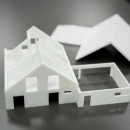
Lithography-based Ceramic Manufacturing (LCM) is a 3D printing process for parts made of technical ceramics. A light-curing suspension of fine ceramic powder and organic binder is exposed layer by layer with a projector. The resulting part, the green part, is then debound and sintered – only then is the ceramic part created.
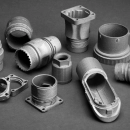
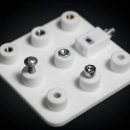
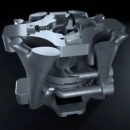
Because each cross-section is exposed with fine pixel resolution, fine structures, lattices and complex shapes can be produced without tooling. LCM is therefore particularly suitable for small parts, prototypes and small batches where material properties such as hardness, temperature resistance or electrical insulation are required and conventional shaping would be too costly.
LCM at a glance
- Process principle
- Exposure of a light-curing ceramic suspension, followed by debinding and sintering
- Materials
- technical ceramics, e.g. ATZ (zirconia–alumina composite ceramic)
- Part size
- small, up to approx. 80 × 50 mm footprint and approx. 240 mm height
- Layer thickness
- typically 25 µm
- Wall thicknesses (ATZ)
- from approx. 0.15 mm, depending on geometry also over 10 mm
- Color
- white
- Quantity
- Single part to small batch
Guide values, not guaranteed properties. The information provided by the supplier in the ordering process or in the quote is authoritative.
How it works
How does ceramic 3D printing with LCM work?
A recoater blade spreads the ceramic suspension as a thin layer in a vat with a transparent bottom. The build platform dips into the suspension, and a projector exposes the cross-section of the part from below, where the binder cures. The platform then rises, new suspension is spread and the next layer is exposed – this is how the green part is built upside down on the platform. The binder is then removed thermally (debinding) and the part is sintered at high temperatures.
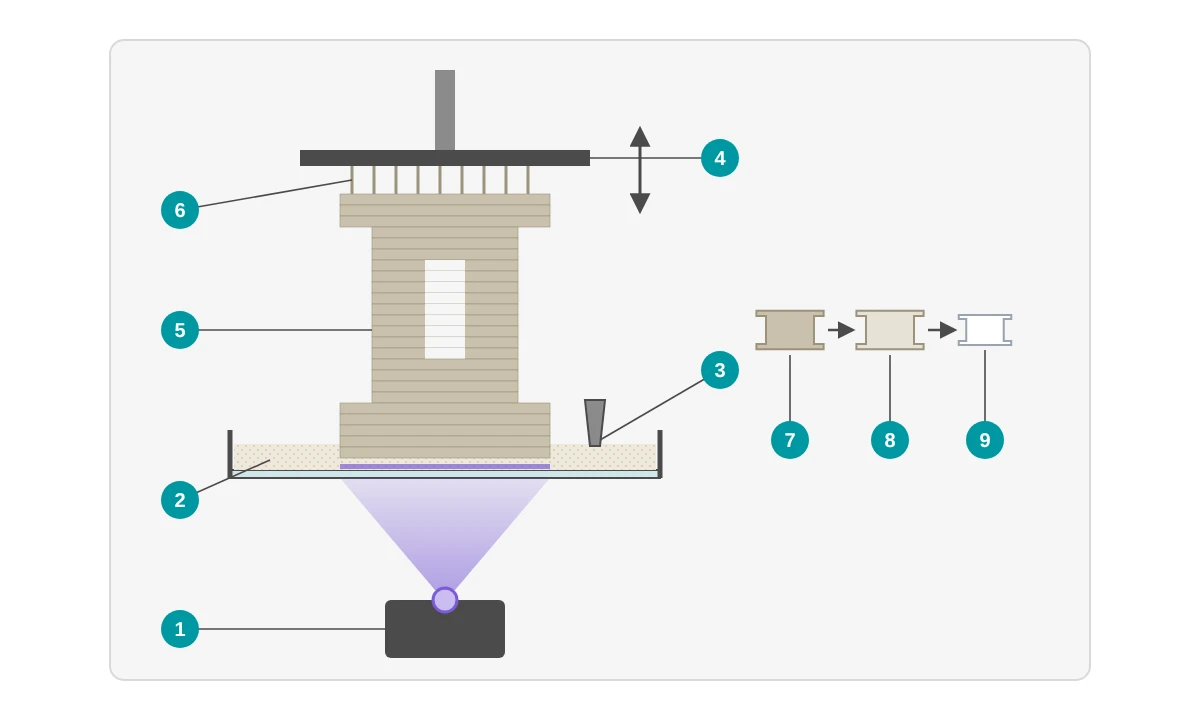
- 1 Projector exposes the cross-section from below through the transparent vat bottom
- 2 Vat with light-curing ceramic suspension
- 3 Recoater blade spreads the suspension as a thin layer
- 4 Build platform dips into the suspension and rises again after exposure
- 5 Green part: ceramic particles in cured binder, built upside down on the platform
- 6 Support structures connect the part and the build platform
- 7 Green part after printing and cleaning
- 8 Debinding: the binder is removed thermally
- 9 Sintering: the ceramic particles densify, the part shrinks depending on the material
- Prepare data The 3D model is oriented in the build space, provided with support structures, scaled up to compensate for sintering shrinkage and sliced into layers.
- Coat and expose The suspension is spread as a thin layer and the projector exposes the cross-section. This is repeated layer by layer.
- Clean the green part The green part is removed from the build platform and freed from excess suspension.
- Debinding In a controlled heat process, the organic binder is removed from the green part.
- Sintering At high temperatures, the ceramic particles densify into the ceramic part. The part shrinks in the process; the shrinkage depends on the material.
- Finishing Depending on requirements, functional surfaces can be post-processed, for example by grinding or polishing. The available options depend on the supplier.


LCM or conventional?
When is ceramic 3D printing worthwhile instead of conventional manufacturing?
Conventionally, ceramic parts are usually pressed, cast or injection-molded and then sintered, or machined from blanks – this requires molds, tools or complex machining. LCM builds the part directly from the 3D data. This is particularly worthwhile for complex geometries, prototypes and small quantities.
| LCM (3D printing) | Conventional shaping | |
|---|---|---|
| Tooling | no mold and no tool required | mold, tool or machining required |
| Geometry | complex shapes, lattices and fine structures possible | limited by tooling and demoldability |
| Quantity | Prototype, single part, small batch | cost-effective mainly for larger quantities |
| Part size | small parts | larger parts as well |
Which route suits your part better depends on geometry, size, material and quantity. Upload your file and see the available offers in the configurator – or contact us if you would like to discuss your project.
↑ Back to overviewAdvantages
What are the advantages of ceramic 3D printing with LCM?
LCM combines the design freedom of 3D printing with the properties of technical oxide ceramics: hard, temperature-resistant and electrically insulating.
Fine details
With layer thicknesses of typically 25 µm and wall thicknesses from approx. 0.15 mm, delicate structures and fine channels can be produced.
Complex shapes without tooling
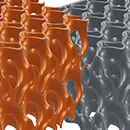
Lattices, honeycombs, undercuts or internal channels with openings are created directly from the 3D data – without a mold or tool.
Temperature-resistant
Typical for ATZ: a maximum application temperature of 1,200 °C.
Electrically insulating
Typical for ATZ: an electrical resistivity of approx. 109 Ω·cm at 20 °C.
Hard and strong
Typical for ATZ: a hardness of 1,400 HV10 and a characteristic flexural strength of 750 MPa.
Dense microstructure
Typical for sintered ATZ: a relative density of over 99 % with a porosity below 1 %.
Materials
Which ceramics are available for 3D printing with LCM?
On the PROTIQ Marketplace, LCM is currently offered with ATZ, for example, a composite ceramic of zirconia and alumina.
You can see which materials are currently available in the configurator after uploading – where you will also find the suppliers’ datasheets.
ATZ (Alumina Toughened Zirconia)
Composite ceramic of yttria-stabilized zirconia (over 79 % by mass) and alumina (under 21 % by mass). High strength and hardness, temperature-resistant and electrically insulating.
Other oxide ceramics
In principle, other oxide ceramics such as zirconia or alumina can also be processed with LCM. We will be happy to clarify on request whether such a material is available for your project.
Material data of ATZ
| Property | Typical value |
|---|---|
| Relative density | > 99 % |
| Porosity | < 1 % |
| Theoretical density | 5.5 g/cm³ |
| Characteristic flexural strength (3-point bending, as sintered) | 750 MPa |
| Compressive strength | 2,100 MPa |
| Young’s modulus | 220 GPa |
| Poisson’s ratio | 0.27 |
| Hardness | 1,400 HV10 |
| Fracture toughness | 6 MPa·m1/2 |
| Thermal conductivity | 6 W/(m·K) |
| Max. application temperature | 1,200 °C |
| Coefficient of thermal expansion | 10.5 · 10−6/K |
| Electrical resistivity (20 °C) | ≈ 109 Ω·cm |
| Specific heat capacity (20 °C) | 500 J/(kg·K) |
Typical values from the datasheet on the PROTIQ Marketplace (as of 2023). These are guide values; they do not constitute guaranteed properties. The values depend on process control and part geometry. The supplier’s information is authoritative.
↑ Back to overviewTechnical data
Which technical data and design rules apply to LCM?
LCM is designed for small parts: up to approx. 80 × 50 mm footprint and approx. 240 mm height. Printing is done with layer thicknesses of typically 25 µm, and walls from approx. 0.15 mm are possible with ATZ. The surface is very smooth; a surface quality below 1 µm is possible.
| Feature | Value |
|---|---|
| Part size | up to approx. 80 × 50 mm footprint and approx. 240 mm height (after sintering); when you upload, the system automatically checks whether the part fits into the build space |
| Layer thickness | typically 25 µm |
| Wall thickness ATZ | from approx. 0.15 mm; depending on geometry also over 10 mm |
| Free-standing thin walls | from approx. 0.15 mm up to approx. 2 mm height; mutually supporting walls, e.g. as a cross profile, also higher |
| Surface | very smooth, surface quality below 1 µm possible |
| Density after sintering | over 99 % of theoretical density (ATZ) |
| Shrinkage during sintering | material-dependent; taken into account during data preparation |
| Color | white |
Guide values based on information from suppliers on the PROTIQ Marketplace, not guaranteed properties. Values may vary depending on material and part. The information provided by the supplier in the ordering process or in the quote is authoritative.
What to consider when designing
- Avoid bulky areas During debinding, the binder must escape from the part. Very thick cross-sections increase the risk of cracks. ATZ is comparatively uncritical here; uniform wall thicknesses and smooth transitions still help.
- Support thin walls Free-standing walls from approx. 0.15 mm are possible up to approx. 2 mm in height. Higher thin walls should support each other, for example as a cross profile.
- Radii instead of sharp edges Ceramics are hard but brittle. Sharp edges and notches act as weak points – plan radii on edges and inside corners.
- Design for compression Ceramics withstand compression much better than bending or tension. For ATZ, the compressive strength is typically 2,100 MPa and the characteristic flexural strength typically 750 MPa.
- Plan supports and cavities Overhangs need support structures that can be removed again – marks may remain at the attachment points. Cavities and channels need openings so that excess suspension can be removed.
- Clarify functional surfaces For fits with tight tolerances, please contact us before ordering – depending on requirements, post-processing may be necessary.
Limits & alternatives
When is another process the better choice?
- Part size LCM is designed for small parts. For larger ceramic parts, conventional processes are more likely to be suitable.
- Bulky parts Very thick cross-sections increase the risk of cracks during debinding. With ATZ, wall thicknesses over 10 mm are also possible depending on geometry; with zirconia or alumina, the limit is significantly lower.
- Brittleness Ceramics are hard but brittle. For shock or impact loads, a metallic material is often the better choice.
- Support structures Support structures must be removable. This restricts the geometry and can leave marks at the attachment points.
| Process | Strengths | May be the better choice if … |
|---|---|---|
| Lithography-based Metal Manufacturing (LMM) | Small, delicate metal parts | … your part should be made of metal, for example because it is subject to shock or impact loads |
| Stereolithography (SLA) | Fine details and smooth surfaces in plastic | … a plastic prototype or demonstration model is sufficient |
Lithography-based Ceramic Manufacturing (LCM) and other process and material names mentioned are trademarks or designations of their respective owners. They are mentioned only to describe the process or materials.
↑ Back to overviewApplications
What is ceramic 3D printing used for?
LCM is suitable for small, complex parts made of technical ceramics – for example for high-temperature applications, electrically insulating parts, wear parts and precision mechanics, as well as for prototypes and small batches in research and development. Technical ceramics are also used in fields such as medical technology or aerospace.
↑ Back to overviewOrdering
How do I order 3D-printed ceramic parts?
Upload your 3D file, choose material and process and see the available offers.
- Upload file Upload your 3D data in the configurator. The system automatically checks whether the part fits into the build space.
- Choose material Choose from more than 160 materials and more than 12 processes – for example ATZ with the LCM process.
- Check the offer As a rule, you immediately see the price and production time of the available suppliers.
- Order You order directly online at the selected price.
If a material cannot be selected directly, feel free to ask us.
↑ Back to overviewFAQ
Frequently asked questions about ceramic 3D printing
What is Lithography-based Ceramic Manufacturing (LCM)?
LCM is a 3D printing process for technical ceramics. A light-curing suspension of ceramic powder and binder is exposed layer by layer with a projector. The resulting green part is then debound and sintered.
Which ceramics are available for 3D printing on the PROTIQ Marketplace?
On the PROTIQ Marketplace, you will currently find ATZ for LCM, for example, a composite ceramic of zirconia and alumina. You can see the current selection in the configurator; you can request other oxide ceramics from us.
How large can ceramic parts made with LCM be?
LCM is designed for small parts, with a footprint of up to approx. 80 × 50 mm and a height of up to approx. 240 mm. When you upload, the system automatically checks whether your part fits into the build space.
Why do ceramic parts shrink during sintering?
During debinding, the binder is removed; during sintering, the ceramic particles densify and the pores between them close. The part shrinks depending on the material. The shrinkage is usually taken into account during data preparation.
How thin and how thick can walls be in 3D-printed ceramics?
With ATZ, wall thicknesses from approx. 0.15 mm are possible; free-standing thin walls up to approx. 2 mm in height. Depending on geometry, wall thicknesses over 10 mm are also feasible with ATZ. However, very bulky cross-sections increase the risk of cracks during debinding.
Does LCM need support structures?
Depending on geometry, yes. The part is built upside down on the build platform, and overhangs need support structures. These must be removable after printing.
How temperature-resistant are 3D-printed ceramics?
That depends on the material. For ATZ, the maximum application temperature is typically 1,200 °C. The supplier’s information is authoritative.
How much does a 3D-printed ceramic part cost?
The price depends on factors such as part volume, size, material, post-processing and quantity. After uploading your file, you will usually see the suppliers’ prices immediately in the configurator.