

 Deutsch
 English
 Italiano








Fused Deposition Modeling (FDM)
Filament-based additive manufacturing for functional plastic components
The process
Fused Deposition Modeling (FDM) – also known as Fused Filament Fabrication (FFF) – is an additive manufacturing process in which thermoplastic plastics in the form of filaments are built up layer by layer into components.
The process belongs to the material extrusion group and is primarily used for prototypes, functional samples, fixtures, and simple components.
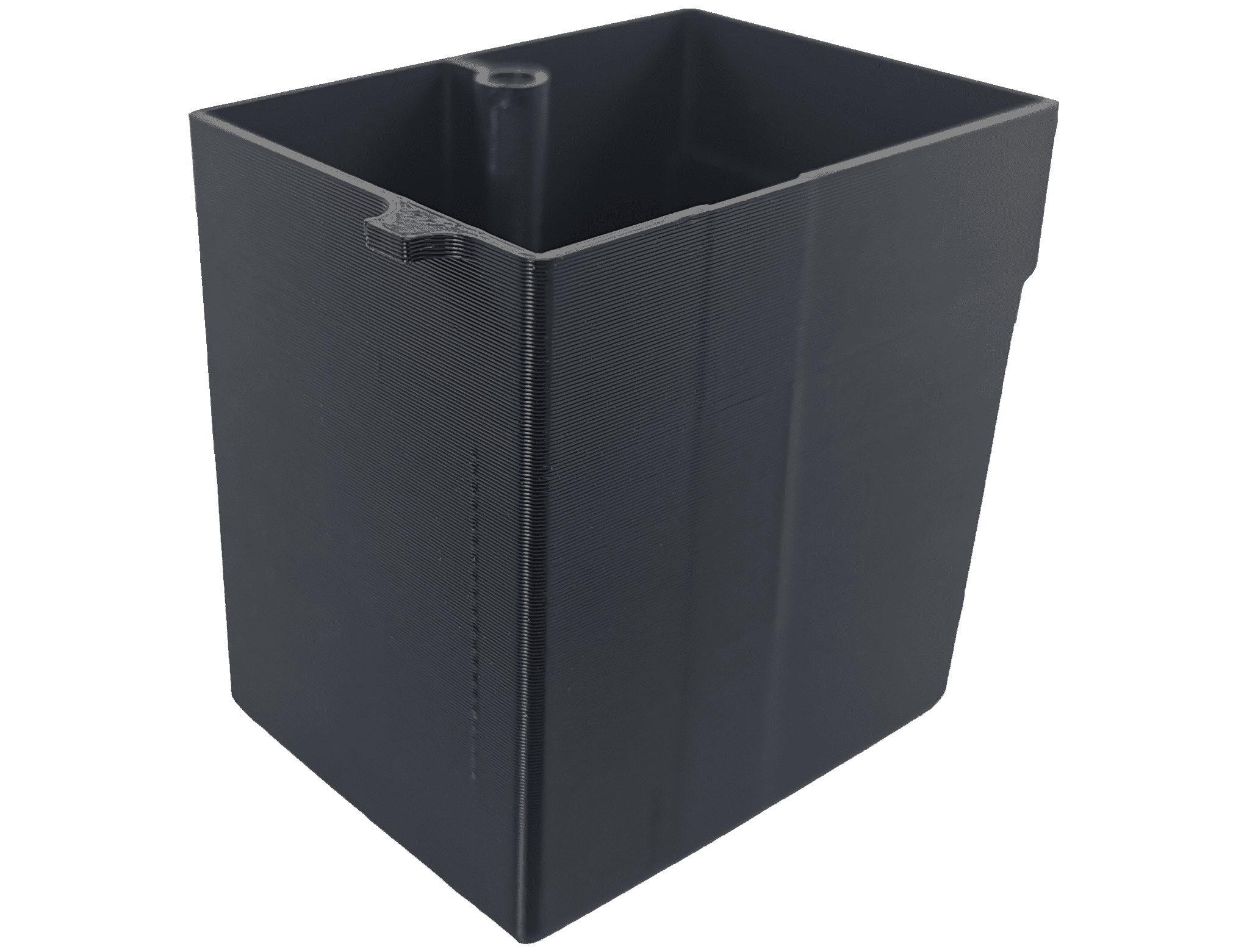
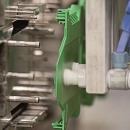
In FDM 3D printing, the filament is melted through a heated nozzle and extruded along a defined path onto a build platform. The material solidifies immediately after deposition and bonds with the underlying layer. The repeated layer-by-layer build creates the three-dimensional component.
Depending on the geometry, support structures are required, which are removed mechanically after printing or – in certain systems – using soluble materials.
Advantages of the FDM process
- Cost-efficient manufacturing: The layer-by-layer build using filament enables comparatively economical component production, particularly for individual parts, prototypes, and small batch sizes.
- Fast implementation of designs: Components can be manufactured directly from CAD data without complex pre- or post-processing. This makes the process particularly suitable for rapid design adjustments, functional samples, and early development phases.
- Large component dimensions possible: The process is well suited for large-volume components where other additive technologies reach geometric or economic limits. This allows even simple geometries to be implemented efficiently at larger dimensions.
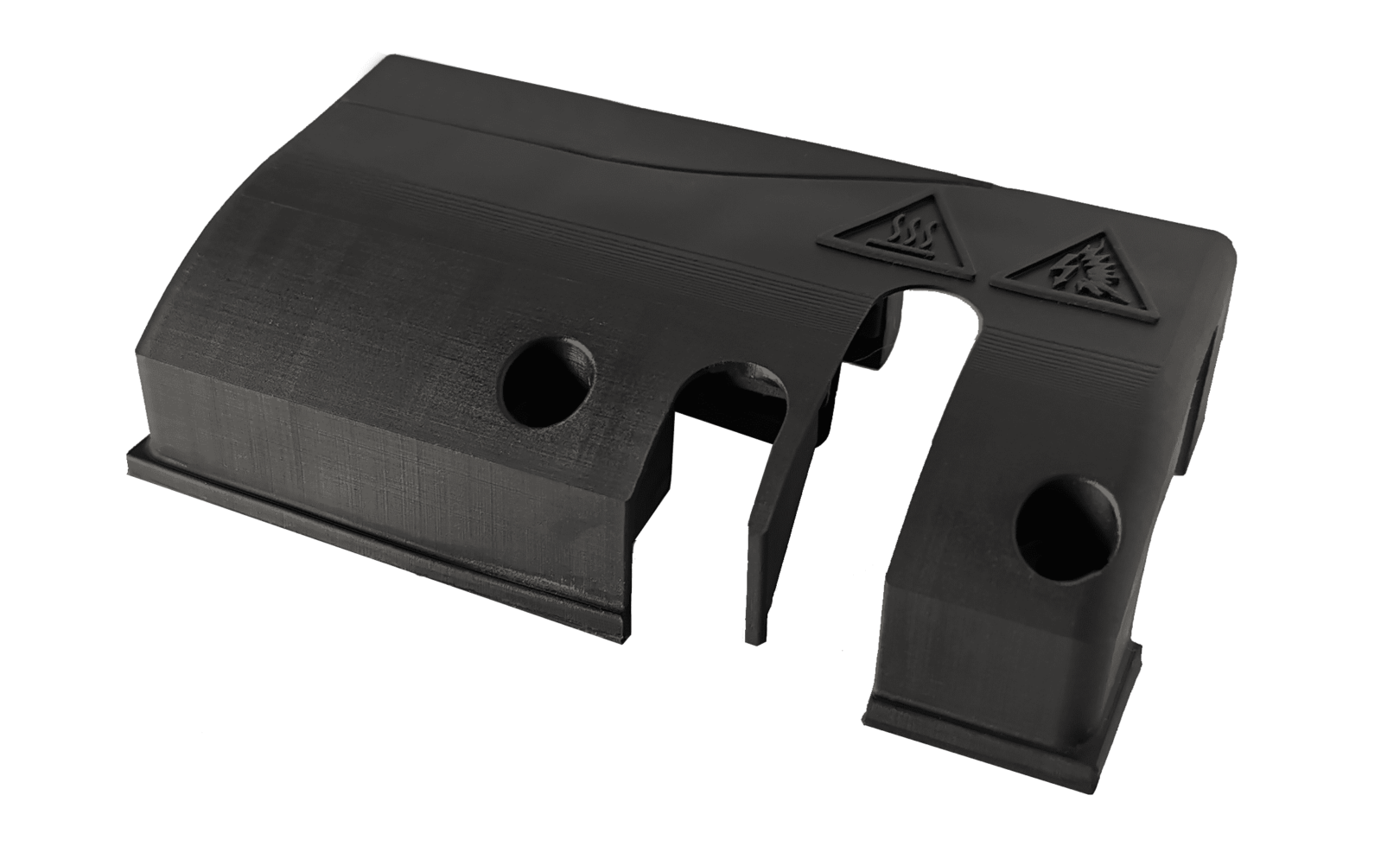
Currently, the process is offered with various materials by our provider Harscher Prototyping on the PROTIQ Marketplace.
Materials
In the FDM process, thermoplastic plastics are used whose properties differ significantly depending on the material. Typical characteristics such as strength, temperature resistance, flexibility, or surface quality depend heavily on the selected plastic.
Base materials:
PLA, PETG, ABS
Engineering materials:
ABS GF, ABS ESD, ASA, ABS FR, ABS Medical, PETG V0, PC, PP, PMMA
High-performance materials:
PPS-CF10, PPA-CF, PA Blue Metal, ASA conductive, ABS-PC/FR
The choice of material has a decisive influence in the FDM process on how reliably and consistently components can be manufactured. Print behavior, warping, layer adhesion, and dimensional accuracy are strongly material-dependent and directly impact achievable quality and repeatability.
The selection of material has a decisive influence on:
- Mechanical properties
- Dimensional accuracy
- Surface quality
- Cost
FDM 3D printing in application
Typical applications
The FDM process is particularly suitable for applications where functionality, speed, and cost efficiency are the main focus and where the highest requirements for detail resolution or surface quality are not required.
Common areas of application include:
Functional prototypes and concept models
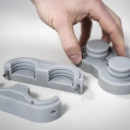
FDM is well suited for the rapid production of components used to verify form, fit, and basic function. Design changes can be implemented quickly without high process or setup costs.
Large-volume or geometrically simple components
For larger components with manageable geometries, the process offers clear advantages, as other additive technologies are often associated with higher costs or build volume limitations.
Applications focused on cost and time efficiency
When short lead times and low entry costs are more important than maximum detail resolution or isotropic material properties, FDM is often a sensible choice.
Limitations and constraints of the FDM process
Limited detail resolution and surface quality
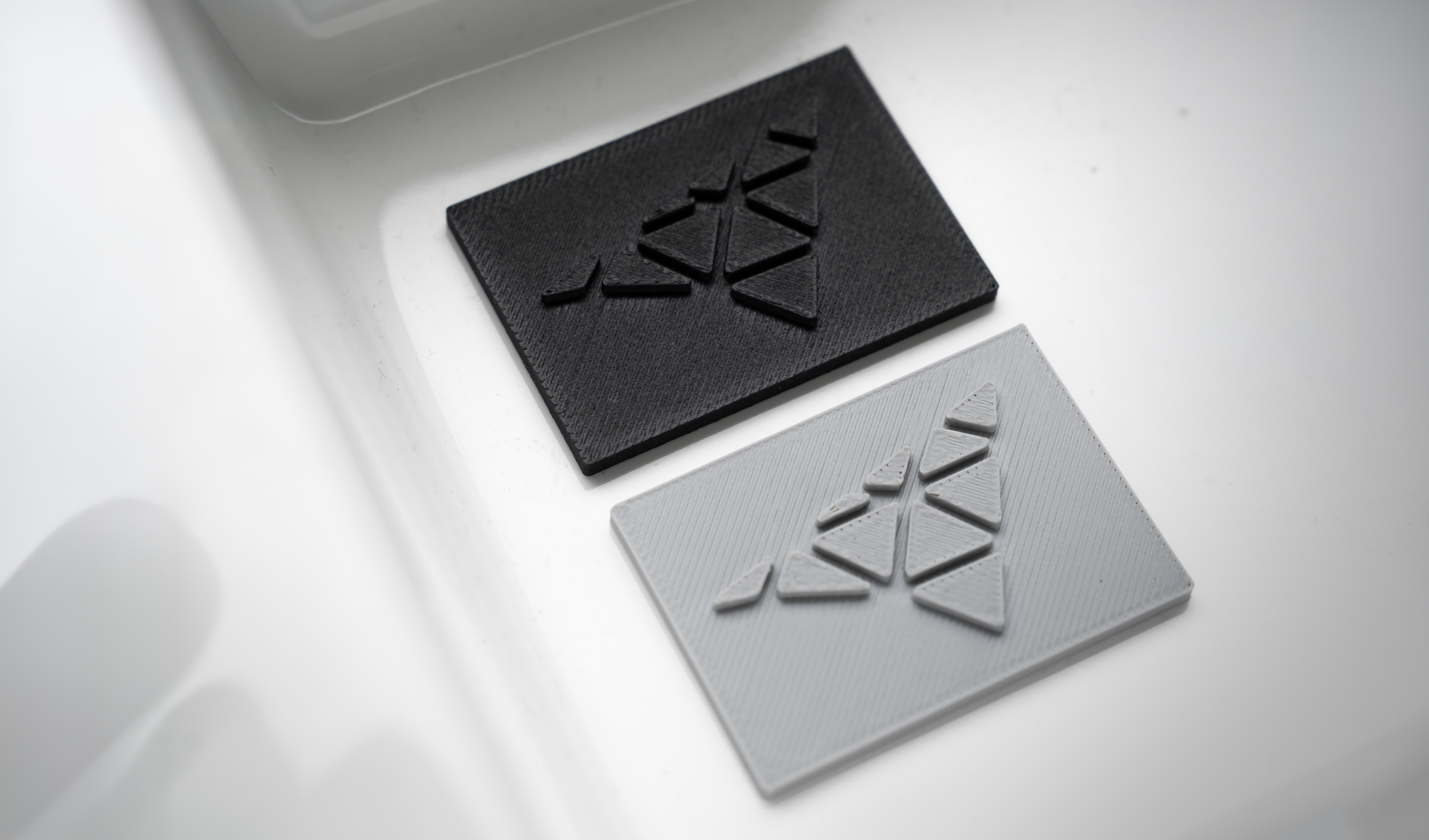
Fine structures, small radii, or very smooth surfaces can only be realized to a limited extent. Visible layer lines are characteristic of the process and require additional post-processing for higher optical requirements.
Anisotropic component properties
Mechanical properties are direction-dependent, as the bond between individual layers can be weaker than within a single layer. This is a key consideration for highly stressed or safety-relevant components.
Support structures required
Overhangs and undercuts require additional support structures that must be removed after printing. This increases post-processing effort and can affect surface quality.
Material-dependent process limits
Not every thermoplastic plastic can be processed with the same level of stability. Depending on the material, print parameters, part orientation, and build environment are critical, making the process more sensitive than more highly standardized industrial processes.
Correctly classifying Fused Deposition Modeling
Between private use and industrial requirements
FDM is one of the most widely used plastic 3D printing processes and is applied in very different contexts. Its high level of recognition primarily results from its widespread use in the private and semi-professional sector, where the process is used for simple applications, hobby projects, and cost-effective prototypes.
In an industrial context, however, significantly higher requirements apply in terms of component quality, process stability, and reproducibility. Here, FDM is used deliberately and selectively – not as a universal solution, but as a process with clearly defined strengths.
Compared to other plastic 3D printing processes specifically developed for high precision, fine details, or near-series applications, FDM follows a pragmatic approach. It offers an economical way to manufacture components quickly and flexibly, but deliberately does not achieve the component quality or process reliability of processes based on more complex equipment, closed process environments, or different feedstock materials.