

 Deutsch
 English
 Italiano



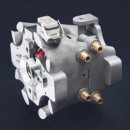
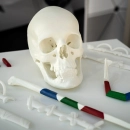

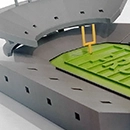



3D Printing for Model Making: Miniatures, Architectural Models, and Model Parts
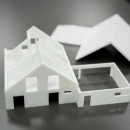
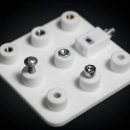
In model making, 3D printing produces miniatures, architectural models, and functional model parts directly from 3D data – without casting molds or milling tools. Different processes are used depending on the model: stereolithography (SLA) for the finest details, selective laser sintering (SLS) for sturdy parts, and fused deposition modeling (FDM) for large, simple models.
On the PROTIQ Marketplace, you upload your model, compare offers from more than 40 providers with more than 160 materials and more than 12 processes, and order directly online – from single pieces to small series.

Applications
What is 3D printing used for in model making?
3D printing is suitable for almost every area of model making – from delicate miniatures and detailed architectural models to sturdy parts for model vehicles.
Miniatures and dioramas
Detailed figures, miniature terrain, and scenery for tabletop games and dioramas – including custom replacement parts for damaged figures.
Architectural and urban models
Concept and presentation models for architects and urban planners with facade details, windows, and balconies. Learn more: 3D printing for architectural models.
Model vehicles
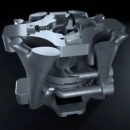
Parts for RC cars, model aircraft, and model railways – such as landing gear, hinges, and other mechanically stressed parts, for which the SLS process is particularly suitable.
Trade fair models and exhibits
Display models that make products and technical details visible at trade fair booths. Learn more: Trade fair models and exhibits.


Processes
Which 3D printing process suits which model?
Stereolithography (SLA) is the first choice for the finest details, selective laser sintering (SLS) for sturdy, functional parts. Large, simple models can be produced inexpensively using FDM, metal parts using selective laser melting (SLM).
| Process | Strengths | Ideal for |
|---|---|---|
| Stereolithography (SLA) | Very high level of detail, very smooth surfaces | Miniatures, dioramas, delicate architectural models |
| Selective laser sintering (SLS) | Sturdy, resilient parts, no support structures needed | Functional model parts, model vehicles, complex geometries |
| Fused deposition modeling (FDM) | Comparatively inexpensive, very large parts possible | Large, simple models |
| Selective laser melting (SLM) | Metal parts | Robust metal parts for models and mechanisms |
Benefits
What are the benefits of 3D printing in model making?
3D printing produces models directly from 3D data – without molds or tools. This makes single pieces and small series economical and enables geometries that are hardly feasible by hand or by casting.
No molds needed
Without casting molds or milling tools, even single pieces pay off – and you simply make changes in the 3D model.
Finest details
Delicate structures, facade details, and small figures can be reproduced precisely.
Wide range of materials
From highly detailed resin to robust plastics and metal – suited to the intended use.
Complex geometries
Cavities, organic shapes, and moving parts that are hardly feasible with conventional methods.
3D data
What should I consider when preparing 3D data for models?
The basis is a 3D model in a common format such as STL, STEP, or OBJ. Especially with scaled-down models, it is worth checking wall thicknesses and fine details – what is stable at full scale can become too thin at model scale.
- File format: The configurator accepts numerous formats – learn more under 3D file formats.
- Scale: After scaling, check whether walls, webs, and details are still thick enough for the selected process.
- Fine details: Very delicate structures work best with stereolithography (SLA). PROTIQ can thicken areas that are too thin for the SLS process.
- No model yet? Create one with CAD software, adapt an existing model, or use ready-made 3D printing models.
Ordering
How do I order model parts on the PROTIQ Marketplace?
Four steps to your finished model: upload, choose material and process, compare offers, and order.
- Upload 3D modelUpload your model in the configurator, for example as an STL, STEP, or OBJ file.
- Choose material and processSelect material and process to match the level of detail, stability, and size of your model.
- Compare offersYou instantly see the providers' prices and production times and decide for yourself who manufactures your part.
- OrderComplete your order directly online.

FAQ
Frequently asked questions about model making with 3D printing
What is model making with 3D printing?
In model making, 3D printing enables the precise production of models, parts, and prototypes directly from digital 3D data. Complex geometries and fine details that are difficult to achieve with conventional methods can be realized.
Which 3D printing process is suitable for miniatures?
For miniatures and dioramas with very fine details, stereolithography (SLA) is particularly suitable. It delivers a high level of detail and very smooth surfaces.
Which process is suitable for resilient model parts?
For functional, mechanically stressed parts – for example for RC cars, model aircraft, or model railways – selective laser sintering (SLS) is suitable. It produces sturdy parts and requires no support structures.
What are the benefits of 3D printing for model making?
3D printing offers great design freedom, short lead times, and a high level of detail. Changes to the model can be implemented quickly without having to make additional tools or molds.
Which materials are available for model making with 3D printing?
Model making mainly uses plastics – such as resins in stereolithography for fine details or polyamides in the SLS process for sturdy parts. Selective laser melting is available for metal parts. The PROTIQ Marketplace offers more than 160 materials.
Which file formats can I upload?
Common formats are STL, STEP, and OBJ. The PROTIQ Marketplace configurator also accepts numerous other CAD formats.
What if my model is too delicate to print?
After scaling, check whether walls and details are thick enough. PROTIQ can thicken areas that are too thin, making them printable with selective laser sintering – contact us about this.
What applications is 3D-printed model making suitable for?
3D-printed models are used for miniatures, architectural models, model vehicles, design studies, and trade fair models, among others – both as single pieces and in small series.
↑ Back to overview