


 Deutsch
 English
 Italiano



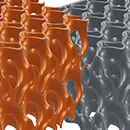








Plastics for 3D Printing and Manufacturing
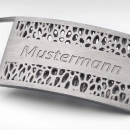
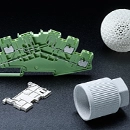
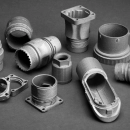
Plastics are materials made of polymers whose properties can be tailored through the choice of base material, manufacturing process and additives. On the PROTIQ Marketplace, you will find plastics for selective laser sintering (SLS), PolyJet and MultiJet modeling and stereolithography (SLA) – more than 20 plastics for laser sintering alone, from PA12, PA11 and PA6 to TPU. You can also request plastic parts made by CNC machining, vacuum casting or injection molding from us.
On this page, you will learn how plastics differ, which plastics are suitable for which process and what to consider when it comes to Shore hardness.
Already know which material you need?
Then simply upload your finished data here. All files are checked automatically, and you instantly see prices from different manufacturers.
Order parts“The choice of plastic is primarily determined by the operating conditions, such as mechanical loads, temperature and contact with media. At the same time, the manufacturing process has a considerable influence on choosing a material that is optimal both technically and economically. The decisive success factor therefore lies not only in knowing the material properties, but equally in understanding modern manufacturing options. Looking at individual processes in isolation falls short. It is more effective to combine manufacturing technologies in a targeted way in order to pool their strengths and compensate for their weaknesses.”
Marcel Kaiser, PROTIQ GmbH
What types of plastics are there?
Depending on their mechanical and thermal behavior, plastics are divided into thermoplastics, thermosets and elastomers. The choice of base material, manufacturing process and additives makes it possible to vary properties such as breaking strength, elasticity, hardness, temperature and heat deflection resistance, and chemical resistance.
Thermoplastics
Thermoplastics consist of polymer chains and can be repeatedly softened, reshaped and melted by applying heat. After cooling, the workpiece retains its new shape. Almost all plastics used in laser sintering – such as PA12, PA11 or TPU – are thermoplastics.
Thermosets
Thermosets are made of tightly cross-linked polymers. Unlike with thermoplastics, heating does not make them plastically deformable but causes the material to decompose. This is why thermosets cannot be recycled by remelting. Once cured, they are hard and brittle and can only be machined mechanically.
Elastomers
Elastomers are very flexible and can temporarily change their shape under pressure or tension. This property is based on loosely cross-linked polymers. Like thermosets, elastomers decompose at excessively high temperatures. Thermoplastic elastomers such as TPU combine the flexibility of elastomers with the processability of thermoplastics.
Plastics for selective laser sintering (SLS)
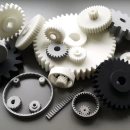
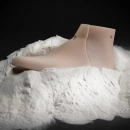
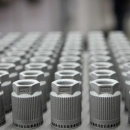
Selective laser sintering mainly processes polyamides (PA). They offer high mechanical strength and long-term stability and are resistant to many chemicals. As the surrounding powder supports the part, no support structures are needed.
The plastics available for laser sintering on the PROTIQ Marketplace include:
- PA12 – in white, gray and natural, as well as glass bead filled, aluminum filled, flame retardant (also halogen-free) and as a detectable variant for food contact
- PA11 – made from renewable raw materials (castor oil), also in black, carbon fiber filled, electrostatic dissipative (ESD) and for food contact
- PA6 – in black as well as glass fiber and carbon fiber filled for high strength and heat deflection resistance
- Flexible plastics – TPU in 75 and 80 Shore A, TPA and PP high flex
- PP and PEKK – polypropylene, e.g. PP black with low warpage, and the high-performance polymer PEKK

3D printing
Plastics for PolyJet and MultiJet modeling
In PolyJet and MultiJet modeling, combining different resins creates composite materials with individual properties – from rubber-like to rigid. The liquid plastics allow delicate parts with very smooth surfaces that are easy to post-process.
- Rubber-like materials – TangoBlack+ and the Digital Materials DM 9840 to DM 9895 with Shore hardnesses from 27 to 95 Shore A
- Rigid materials – VeroWhite+, the translucent VeroClear and Digital ABS
You define the desired material characteristics directly in the online configurator.
↑ Back to overview
3D printing
Plastics for stereolithography (SLA)
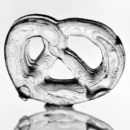
In stereolithography, liquid resin is cured layer by layer using a UV laser. The parts stand out for their particularly fine detail and smooth, high-quality surface.
Three resin variants are available which – as their names suggest – excel in transparency, temperature resistance or toughness:
- Clear – colorless and transparent
- High Temp – for applications with increased thermal loads
- Tough – particularly tough and resilient

Other processes
Plastic parts by CNC machining and casting
Not every plastic part has to be printed. Plastic parts can also be machined by CNC or produced by vacuum casting and injection molding. Depending on the part and material, you can select the process directly in the configurator or simply request your project from us – from single parts to series.
CNC machining
Turning and milling produce parts with high dimensional accuracy and a defined surface quality – for single parts and prototypes as well as for series.
Vacuum casting
Casting resin is drawn by vacuum into a silicone mold, which is usually taken from a 3D-printed master model. Depending on the part, around 25 castings are possible per mold – ideal for small series.
Injection molding
Injection molding is one of the most widely used processes for plastic parts in large quantities. The plastic is injected into a mold and the finished part is produced in a single step.
Important plastics compared
The following overview shows the properties and typical applications of the most important engineering plastics. Which of them are suitable for your part depends on the manufacturing process – after uploading, the configurator shows you all materials that can be ordered directly. You can request other plastics from us at any time.
| Plastic | Properties | Typical use |
|---|---|---|
| Polyamide (PA) | High strength and stiffness, good abrasion and wear resistance, excellent impact strength, resistant to organic solvents; even stiffer with glass or carbon fibers | Engineering material for functional parts |
| Polycarbonate (PC) | Transparent, high strength, impact strength, stiffness and hardness, good electrical insulator; resistant to water, dilute acids and many oils, greases and alcohols | Alternative to glass, insulating parts |
| Polyethylene (PE) | Low strength, hardness and stiffness, but high ductility, impact strength and good sliding properties; the lower the crystallinity, the more transparent; resistant to water, acids, alkalis, alcohols, oils and gasoline | Sliding parts and parts exposed to chemicals |
| Polystyrene (PS) | From crystal clear to white foam; high stiffness with medium hardness and strength, low impact strength; resistant to greases, oils and low-concentration acids and bases | Transparent or foamed parts |
| Acrylonitrile butadiene styrene (ABS) | Break-resistant, high impact strength and surface hardness, good weathering and chemical resistance; easy to coat, e.g. chrome-plated | Housings and parts with coated surfaces |
| Ethylene-vinyl acetate (EVA) | Copolymer of ethylene and vinyl acetate; insensitive to cold with rubber-like flexibility; strength, stiffness and chemical resistance decrease as the vinyl acetate content increases | Flexible, cold-resistant parts |
| Polybutylene terephthalate (PBT) | Very high dimensional stability, high strength and stiffness, good friction and wear properties, good solvent resistance, good electrical insulator | Plain and roller bearings, gears |
| Polymethyl methacrylate (PMMA) | Transparent and polishable, very scratch-resistant with appropriate treatment; medium strength, high stiffness and hardness; resistant to weathering and aging | Alternative to glass (known as Plexiglas®) |
| Polyoxymethylene (POM) | High strength, hardness and stiffness, low friction, good abrasion resistance, excellent spring properties; resistant to many chemicals, acids, alkalis, oils and alcohols | Functional parts in precision engineering and apparatus construction |
| Polypropylene (PP) | One of the most widely used commodity plastics; low density, very good fatigue resistance, average strength, stiffness and impact strength | Packaging, living hinges |
| Thermoplastic elastomers (TPE) | Flexible like elastomers, but can be repeatedly plasticized by heating and are permanently elastic again after cooling | Flexible parts |
| Thermoplastic polyurethane (TPU) | Elastic and wear-resistant, resistant to oils and greases, good abrasion resistance | Versatile, e.g. for flexible, abrasion-resistant parts |
Shore hardness explained: what hardness does your part need?
Shore hardness indicates how soft or hard a plastic is and is measured on the Shore 00, Shore A and Shore D scales. Flexible materials such as TPU are on the Shore A scale: laser sintering offers TPU in 75 and 80 Shore A, and PolyJet offers rubber-like materials from 27 to 95 Shore A. Rigid plastics such as SLA resins are specified in Shore D.
Choosing the right Shore hardness is crucial when you order parts for your industrial production on our platform – especially with flexible materials such as TPU. Shore hardness directly affects how your part performs, from flexibility and damping to abrasion resistance.
Our Shore chart helps you quickly understand and compare the three most important scales.

What is Shore hardness?
Shore hardness is an internationally standardized measure of the hardness of elastomers and plastics. It is measured with a durometer, which determines the material’s resistance to indentation by a standardized indenter. It determines how a part behaves under load – whether it yields, dampens, stays flexible or keeps its shape.
The three Shore scales at a glance
Shore 00 – extremely soft
For very soft materials.
Typical examples: gel pads, soft-touch components, soft foams.
Applications: damping, cushioning, protection.
Shore A – soft to medium hard
The most important scale for rubber, elastomers and flexible plastics.
Typical examples: O-rings, seals, erasers, shoe soles.
Applications: sealing technology, flexible parts, shock absorption.
Shore D – hard
For resistant, dimensionally stable plastics.
Typical examples: rollers, technical plastic parts, safety helmets.
Applications: housings, load-bearing parts.
What our chart helps you do
- Assess whether a material is extra soft, soft, medium hard, hard or extra hard
- Compare Shore 00, Shore A and Shore D directly
- Get your bearings with everyday examples (e.g. eraser, tire, safety helmet)
- Make faster and more reliable material decisions when ordering
Which Shore hardness for which application?
Low Shore hardness (soft)
- high flexibility
- good damping
- ideal for seals, cushions, decoupling
Medium Shore hardness
- balanced ratio of hardness and flexibility
- suitable for technical molded parts, vibration elements, elastomers
High Shore hardness (hard)
- high dimensional stability
- good abrasion and compressive strength
- ideal for rollers, housings, functional plastic parts
Frequently asked questions about plastics in manufacturing
Which plastic is suitable for functional parts in 3D printing?
PA12 is one of the most widely used plastics in selective laser sintering and is particularly suitable for resilient prototypes, functional samples, small series and technical parts with complex geometries. For higher requirements on strength and heat deflection resistance, glass or carbon fiber filled polyamides such as carbon fiber filled PA6 are available.
What is the difference between PA11 and PA12?
Both are polyamides for selective laser sintering. PA11 is made from renewable raw materials (castor oil) and, according to the datasheet, is considerably more ductile, with an elongation at break of around 45% compared to around 20% for PA12. PA12, on the other hand, is slightly lighter and available in a particularly wide range of variants, such as glass bead filled or flame retardant.
Which plastics are particularly heat-resistant?
In laser sintering, glass and carbon fiber filled PA6 reach a heat deflection temperature of around 200 °C (at 1.80 MPa) according to the datasheet. The high-performance polymer PEKK has a melting point of 298 °C. In stereolithography, High Temp is a particularly temperature-resistant resin.
Are there transparent plastics for 3D printing?
Yes. Stereolithography offers the colorless resin Clear, and PolyJet offers the translucent VeroClear. Both are suitable for parts that need to let light through.
Which plastic is electrostatic dissipative?
For parts that need to protect against electrostatic discharge, PA11 ESD is available for selective laser sintering. The material is suitable, for example, for applications in electronics manufacturing. More about PA11 ESD
Are there plastics for food contact?
Yes. Laser sintering offers PA11 blue food grade and PA12 blue MDT food grade, which according to the datasheet are suitable for applications involving food contact. PA12 blue MDT is also detectable.
Are there flame-retardant plastics?
Yes. For selective laser sintering, flame-retardant PA12 is available, including a halogen-free variant.
↑ Back to overview