


 Deutsch
 English
 Italiano











Plastics for stereolithography (SLA): robust, transparent and heat-resistant resins
Which plastics are available for stereolithography?
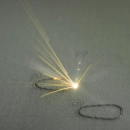
In stereolithography (SLA), a UV laser cures liquid resin layer by layer. The materials are photopolymers – resins that solidify under light. They produce parts with a smooth surface and very fine details.
PROTIQ manufactures SLA parts in its own production, including from RS Tough, RS Clear and RS High Temp. Other manufacturers on the PROTIQ Marketplace offer additional resins.
The resins differ mainly in three respects: robustness, transparency and temperature resistance. Depending on what your part needs to show or withstand, a different resin will be the right fit.
SLA resins at a glance
- Process
- Stereolithography (SLA)
- Materials
- resins (photopolymers)
- Resins at PROTIQ
- RS Tough, RS Clear, RS High Temp
- Standard tolerance at PROTIQ
- ± 0.3 %, not tighter than ± 0.05 mm
- Surface
- smooth, fine details
- Support structures
- required, removed
- Colors
- gray, transparent, amber
Larger tolerances apply to some resins. Other manufacturers state their values in their respective quotes.
Resins at a glance
Which SLA resins can you choose from?
The SLA resins from PROTIQ’s production cover three typical requirements: robust, transparent or heat-resistant.
Robust: RS Tough
Gray resin for form and functional prototypes, detailed components and master patterns.
Learn moreHeat-resistant: RS High Temp
After heat treatment, dimensionally stable up to high temperature ranges.
Learn moreRS Tough
RS Tough: robust resin for prototypes
RS Tough is a gray, comparatively robust resin. It is suitable for form and functional prototypes, detailed components and master patterns.
With an elongation at break of 18 %, RS Tough is considerably less brittle than many other SLA resins. Its tensile strength is 41 MPa and its hardness 86 Shore D. The heat deflection temperature is 62 °C at 0.45 MPa – which makes the resin well suited for applications at room temperature.
↑ Back to overview
RS Clear
RS Clear: transparent parts
RS Clear produces see-through parts – for example for visual models, flow studies or master patterns.
With a tensile strength of 65 MPa and a tensile modulus of 2,800 MPa, RS Clear is the strongest and stiffest of the three resins. For the clearest possible appearance, the parts are usually post-processed, for example sanded, polished or given a clear coat. The standard tolerance is ± 0.3 %, not tighter than ± 0.1 mm.
↑ Back to overviewRS High Temp
RS High Temp: for high temperatures
RS High Temp is an amber-colored resin that achieves a very high heat deflection temperature after heat treatment.
After heat treatment, the heat deflection temperature is 238 °C (0.45 MPa) or 101 °C (1.82 MPa). This makes RS High Temp suitable for prototypes that are tested in warm environments. With an elongation at break of 3.3 %, however, the resin is more brittle than RS Tough. The standard tolerance is ± 0.5 %, not tighter than ± 0.1 mm.
↑ Back to overviewProperties
What are the properties of the SLA resins?
The table shows the key properties of the resins from PROTIQ’s production.
| Resin | Color | Tensile strength (MPa) | Tensile modulus (MPa) | Flexural modulus (MPa) | Elongation at break (%) | Hardness (Shore D) | Izod notched impact strength (J/m) | Heat deflection temperature 0.45 / 1.82 MPa (°C) |
|---|---|---|---|---|---|---|---|---|
| RS Tough | gray | 41 | 1,890 | 1,850 | 18 | 86 | 44 | 62 / 54 |
| RS Clear | transparent | 65 | 2,800 | 2,200 | 6.2 | – | 25 | 73 / 58 |
| RS High Temp | amber | 58 | 2,750 | 2,620 | 3.3 | – | 18 | 238 / 101¹ |
Values from the PROTIQ material data sheet (as of 08/2026), rounded; not guaranteed properties. The values depend, among other things, on post-curing, part geometry and build direction. ¹ After heat treatment. The heat deflection temperature is not a continuous service temperature. The data sheet in the ordering process is binding.
↑ Back to overviewSelection
Which SLA resin is right for my application?
Choose the resin based on the most important requirement for your part.
| Requirement | Suitable resin |
|---|---|
| Robust form and functional prototypes | RS Tough |
| Detailed components and master patterns | RS Tough |
| Transparency, visual models | RS Clear |
| High stiffness | RS Clear |
| High temperatures | RS High Temp |
Other manufacturers on the PROTIQ Marketplace offer additional resins, for example Accura Xtreme or Somos WaterShed XC 11122. You can see which resins are currently available in the configurator after uploading your file – the manufacturer’s data sheet is also linked there for each offer.
↑ Back to overviewGood to know
What should I consider with SLA resins?
SLA resins behave differently from thermoplastics from the powder bed. These points will help you choose.
- Support structuresSLA parts need supports. Small marks remain at the contact points, which can be reworked.
- TemperatureThe heat deflection temperature of many resins is around 50–60 °C. For higher temperatures, there is RS High Temp.
- TransparencyFor a clear appearance, transparent resins are usually sanded, polished or painted.
- LoadSLA resins are usually stiffer and less impact-resistant than polyamides. For heavily loaded functional parts, laser sintering is often the better choice.
Ordering
How do I order SLA parts?
You order SLA parts directly on the PROTIQ Marketplace – with a live price and a free choice of manufacturer.
- Upload 3D fileUpload your 3D model. The system automatically checks whether the part fits into the build volume.
- Choose a resinChoose the resin and, if required, a finish.
- Compare offersCompare prices and production times and choose your manufacturer yourself.
- OrderOrder directly online or download a binding PDF quote.
FAQ
Frequently asked questions about plastics for stereolithography
Which plastics are used in stereolithography?
Stereolithography processes liquid resins, known as photopolymers, which cure under UV light. PROTIQ manufactures from RS Tough, RS Clear and RS High Temp; other manufacturers on the PROTIQ Marketplace offer additional resins.
Can you print transparent parts with SLA?
Yes. RS Clear produces see-through parts, for example for visual models or flow studies. For the clearest possible appearance, the parts are usually sanded, polished or painted.
Which SLA resin can withstand high temperatures?
After heat treatment, RS High Temp achieves a heat deflection temperature of 238 °C at 0.45 MPa. However, the heat deflection temperature is not a continuous service temperature; whether a part can withstand the operating conditions must be checked on a case-by-case basis.
How strong are SLA parts?
That depends on the resin. RS Tough achieves an elongation at break of 18 % and is suitable for functional prototypes. Overall, SLA resins are usually stiffer and less impact-resistant than polyamides from laser sintering.
How accurate are SLA parts?
Unless otherwise specified, a standard tolerance of ± 0.3 %, not tighter than ± 0.05 mm, applies to SLA parts manufactured by PROTIQ. For RS Clear, ± 0.3 % or ± 0.1 mm applies; for RS High Temp, ± 0.5 % or ± 0.1 mm.
SLA or SLS – which plastic is right?
SLA resins produce smooth surfaces, fine details and, if required, transparent parts. Polyamides from laser sintering are tougher and more durable and do not need support structures. SLA is suitable for appearance and details, SLS usually for loaded functional parts.
Where can I find the data sheets for the SLA resins?
You will find the valid data sheets in the ordering process: after you upload your 3D file, the manufacturer’s data sheet is linked for each offer.