


 Deutsch
 English
 Italiano






PA12 in Laser Sintering
PA12 in SLS: a robust plastic for functional 3D‑printed parts
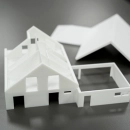
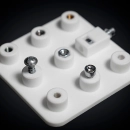
PA12 is one of the most important plastics in industrial 3D printing and is widely used in selective laser sintering. The material combines good mechanical strength with low weight, high design freedom and cost‑efficient production without conventional tooling. This makes PA12 particularly suitable for functional prototypes, technical samples, small series, spare parts and components with complex geometries.
What is PA12?
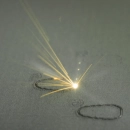
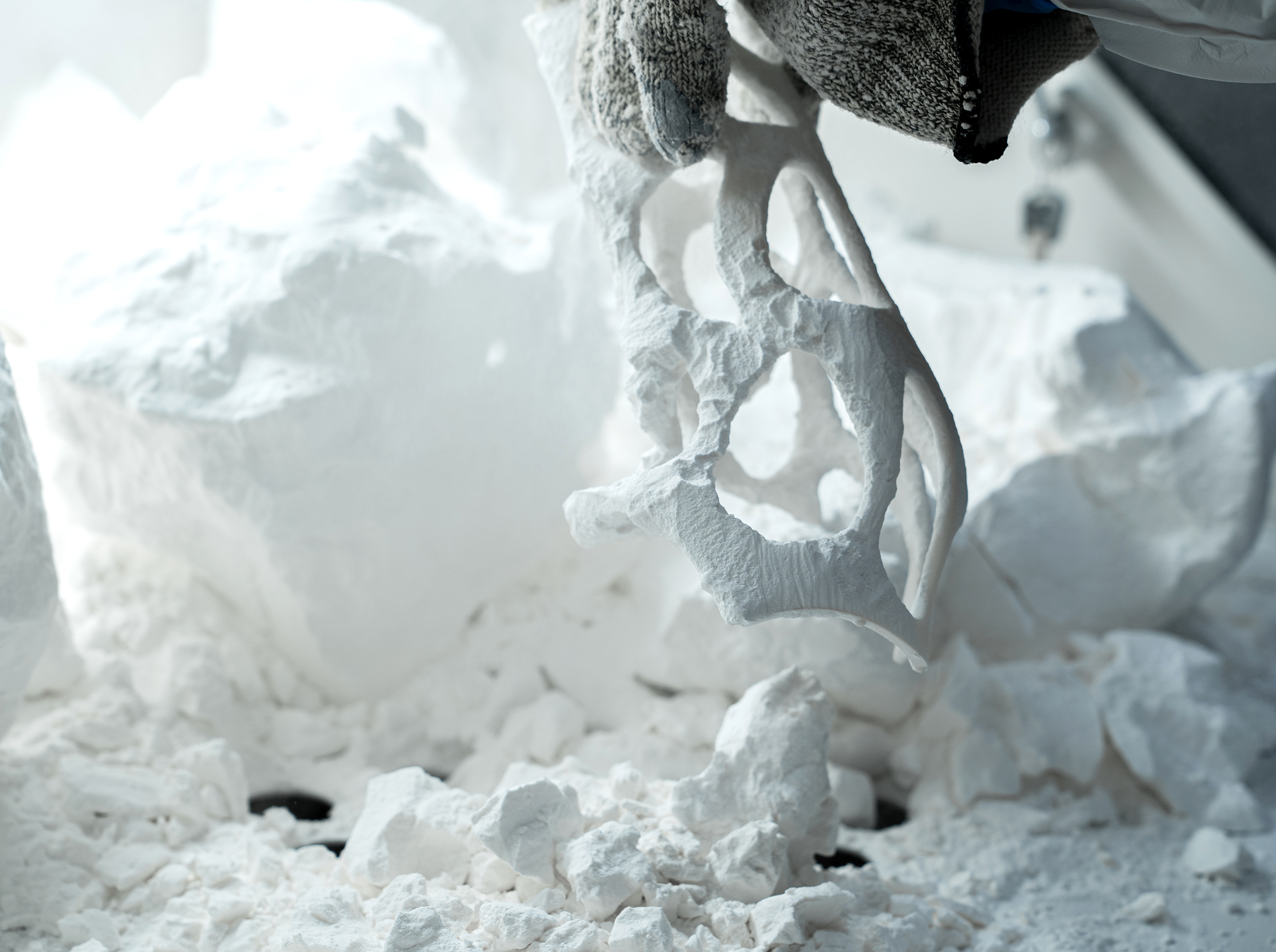
PA12 is the abbreviation for polyamide 12, an engineering thermoplastic from the polyamide family. In 3D printing, PA12 is commonly processed as a fine powder, especially in selective laser sintering (SLS). In this process, the plastic powder is applied layer by layer and selectively fused by a laser at the locations where the component is to be created.
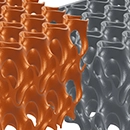
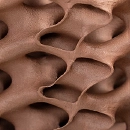
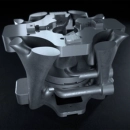
A major advantage of laser sintering is that conventional support structures are generally not required. The surrounding, unfused powder supports the part during the build process. This makes it possible to manufacture complex geometries, internal structures, undercuts or functionally integrated parts with PA12 that would be difficult or even impossible to produce using conventional manufacturing methods.
Read more about selective laser sintering here >
For technical users, PA12 is particularly interesting because it offers a well‑balanced set of properties: it is strong, comparatively lightweight, tough and suitable for many functional applications. As a result, PA12 is often chosen when a part is not only intended as a visual model, but needs to be tested, assembled or used in real‑world conditions.
Properties of PA12 in laser sintering
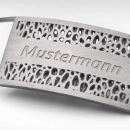
PA12 components produced using the laser sintering process are characterised by a balanced combination of strength, toughness and low weight. This makes them suitable for many technical applications where a part is not only evaluated visually but actually used, assembled or subjected to mechanical loads. A typical feature of PA12 SLS parts is a slightly rough or grainy surface, which may be acceptable depending on the application or modified through post‑processing.
Mechanical properties
General properties
Density (laser‑sintered): 0.9 – 1.0 g/cm³
Surface roughness after sandblasting (Ra/Rz): 8–11 / 50–70 µm
Accuracy: +/- 0.7 %, min. 0.1 mm
Minimum wall thickness: 1.0 mm
Thermal properties
Electrical properties
Typical applications for PA12 parts
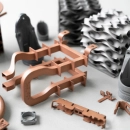
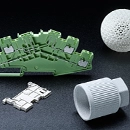
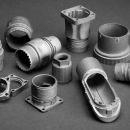
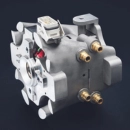
In laser sintering, PA12 is primarily used for parts where functionality, stability and fast availability are key priorities. The material is suitable for applications in product development, design engineering, mechanical engineering, electrical engineering, automotive, tooling and fixture construction, and spare parts management.
Functional prototypes
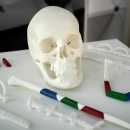
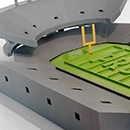
PA12 is very well suited for prototypes that are not only intended for visual evaluation. Engineers and designers can use PA12 parts to check whether geometry, assembly, functionality and load‑bearing behaviour are fundamentally suitable. This is a major advantage in iterative development processes: design revisions can be implemented quickly and produced again without modifying tools.
Small series and pre‑series parts
When parts are required in small or medium quantities, PA12 in laser sintering can be a cost‑effective alternative to conventional manufacturing methods. This is particularly the case when quantities are too low for injection moulding, geometries are complex or parts need to be available at short notice. For pre‑series production, PA12 can help test components under realistic conditions before investing in tooling or series production processes.
Housings, brackets and covers
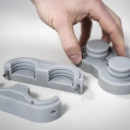
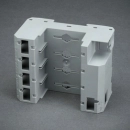
Many technical plastic components consist of housings, brackets, clips, covers or mounting elements. PA12 is well suited for these applications because functional features can be integrated directly into the part design. These include mounting points, cable guides, cut‑outs, snap‑fit connections or ergonomic geometries.
Spare parts and tooling
PA12 can also play an important role in spare parts management. If parts are no longer available, only required in small quantities or need to be replaced at short notice, additive manufacturing can provide a flexible solution — provided that material properties, loads and operating conditions are appropriate for the application.
Fixtures, gauges and assembly aids
In production environments, customised fixtures, inspection tools, assembly aids or handling systems are often required. PA12 can be a practical choice here, as parts can be designed to be lightweight, robust and geometrically flexible. Especially for internal tooling, the focus is often not on a perfect visual surface, but on fast, functional and accurate implementation.
Surfaces and post‑processing of PA12
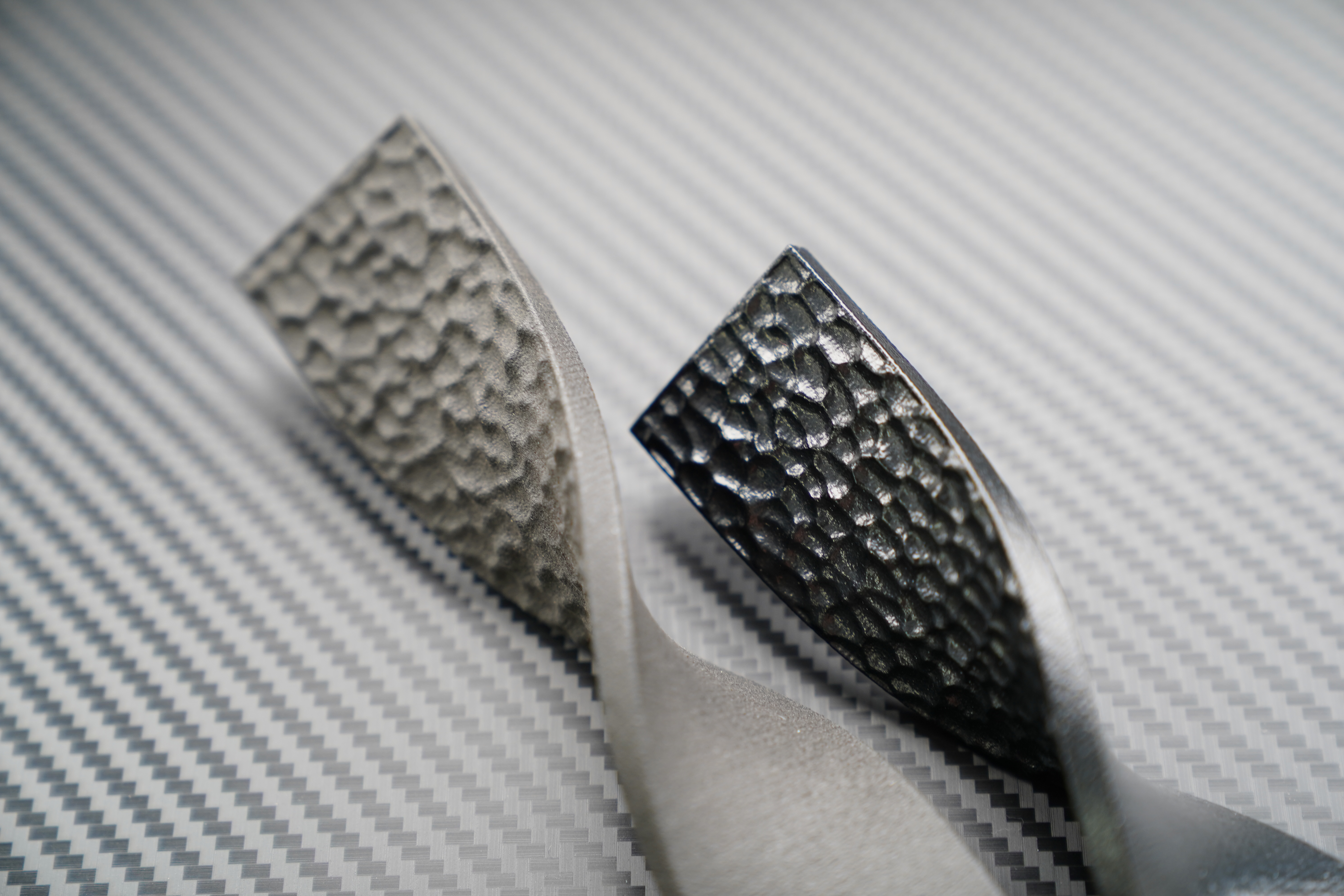
PA12 parts produced by laser sintering typically have a slightly rough or grainy surface. This surface is inherent to the powder‑bed‑based process and is completely sufficient for many technical applications. However, if a part is visibly installed, requires a specific haptic feel or has particular requirements regarding friction, cleaning or appearance, post‑processing can be useful.
Depending on the part and the desired result, different post‑processing options may be considered, such as dyeing, chemical smoothing, painting or coating. Which option makes sense depends strongly on geometry, application and the desired visual or functional outcome. A purely functional fixture may not require any special surface finish, whereas a visible housing or a part intended for customer samples may need a higher‑quality appearance and feel.
Natural surface: The natural SLS surface is slightly rough and technical in appearance. It is suitable for many functional parts, fixtures and internal applications.
Dyed parts: Dyeing allows PA12 parts to be visually customised. This is particularly interesting for visible parts, series samples or components with a uniform appearance.
Smoothed surfaces: Smoothing can improve both surface quality and haptics. Whether it is appropriate depends on part geometry, wall thicknesses, details and the intended application.
Frequently asked questions about Polyamide 12
What is PA12 in 3D printing?
PA12 is an engineering plastic from the polyamide family. In 3D printing, it is commonly used in selective laser sintering, where the material is processed as a powder and fused layer by layer using a laser.
Is PA12 the same as Polyamide 12 or Nylon 12?
Yes. PA12 stands for Polyamide 12 and is often also referred to as Nylon 12 in an international context. The same base material is meant, although specific material variants and datasheet values may vary depending on the supplier or the process.
What is PA12 used for in laser sintering?
PA12 is particularly suitable for functional prototypes, technical components, housings, brackets, covers, fixtures, spare parts and small series.
What surface do PA12 parts from the SLS process have?
PA12 parts produced by laser sintering typically have a slightly rough or grainy surface. This surface may be sufficient for technical applications or modified through post‑processing, depending on the desired result.
What is the difference between PA12 and PA11?
PA12 and PA11 are both polyamides that can be used in industrial 3D printing. PA12 is often the universal standard material in SLS applications, while PA11 may be of interest depending on the use case, particularly when different requirements regarding toughness, flexibility or sustainability are the priority.
Can PA12 be smoothed?
Smoothing may be possible depending on the component and the process used. Whether it makes sense depends on geometry, wall thicknesses, details and the intended application. For this reason, post‑processing should be considered early in the design process.