


 Deutsch
 English
 Italiano







Metals for 3D printing: materials for laser melting
Metals in 3D printing
Which metals are available for 3D printing?
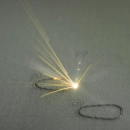
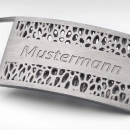
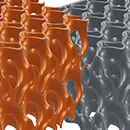
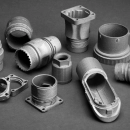
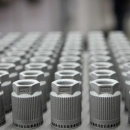
In selective laser melting (SLM), a laser fully melts fine metal powder layer by layer. This produces dense, resilient metal parts that can be heat-treated and machined like conventionally manufactured parts.
In Blomberg, PROTIQ manufactures parts from copper, brass, zinc, steel and aluminum. Special features include pure copper with high electrical conductivity, RS brass and the zinc alloy Zamak 5 – materials that are otherwise hard to find in 3D printing. Other manufacturers on the PROTIQ Marketplace add to the range, for example with titanium or magnesium.
Which material is right depends on the application: conductivity, strength, hardness, corrosion resistance or weight. The following sections and the properties table will help you choose.
Metals at a glance
- Process
- Selective laser melting (SLM)
- Materials at PROTIQ
- Copper, brass, zinc, steel, aluminum
- Other manufacturers
- e.g. titanium, magnesium
- Minimum wall thickness
- 0.4–0.6 mm depending on the material
- Media-tight parts
- Copper materials from approx. 1 mm wall
- Accuracy
- ± 0.1 mm or ± 0.7 %
- Post-processing
- Heat treatment, blasting, machining
Information for materials from PROTIQ production. Other manufacturers state their values in their respective offers.
Material groups
Which metal groups can you choose from?
The metals used in laser melting can be grouped by their strengths: copper materials conduct electricity and heat, brass and zinc replicate production materials, steels are strong and hard, aluminum is lightweight.
Copper materials
Pure copper, CuCr1Zr and RS copper – high electrical and thermal conductivity, for example for inductors and heat sinks.
Learn moreBrass and zinc
RS brass and Zamak 5 – gold-colored parts and prototypes in the production material used in zinc die casting.
Learn moreStainless steel and tool steel
Corrosion-resistant stainless steels and hard, wear-resistant tool steel.
Learn moreAluminum
AlSi10Mg – lightweight with good thermal conductivity, for lightweight design and housings.
Learn moreCopper
Copper in 3D printing: pure copper, CuCr1Zr and RS copper
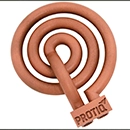
Copper conducts electricity and heat better than almost any other metal. In 3D printing, it is used to make parts with integrated cooling channels and complex shapes – such as inductors, heat sinks or electrodes.
- Pure copper: electrical conductivity 58 MS/m, thermal conductivity 415 ± 10 W/(m·K) – for applications where conductivity is the top priority.
- CuCr1Zr: low-alloy copper alloy with higher strength; after heat treatment, 220 MPa tensile strength with an electrical conductivity of 49 MS/m in the edge zone.
- RS copper: copper material from PROTIQ production with a thermal conductivity of 265 W/(m·K) after heat treatment.
Media-tight parts made of copper materials are possible from a wall thickness of approx. 1 mm.
↑ Back to overview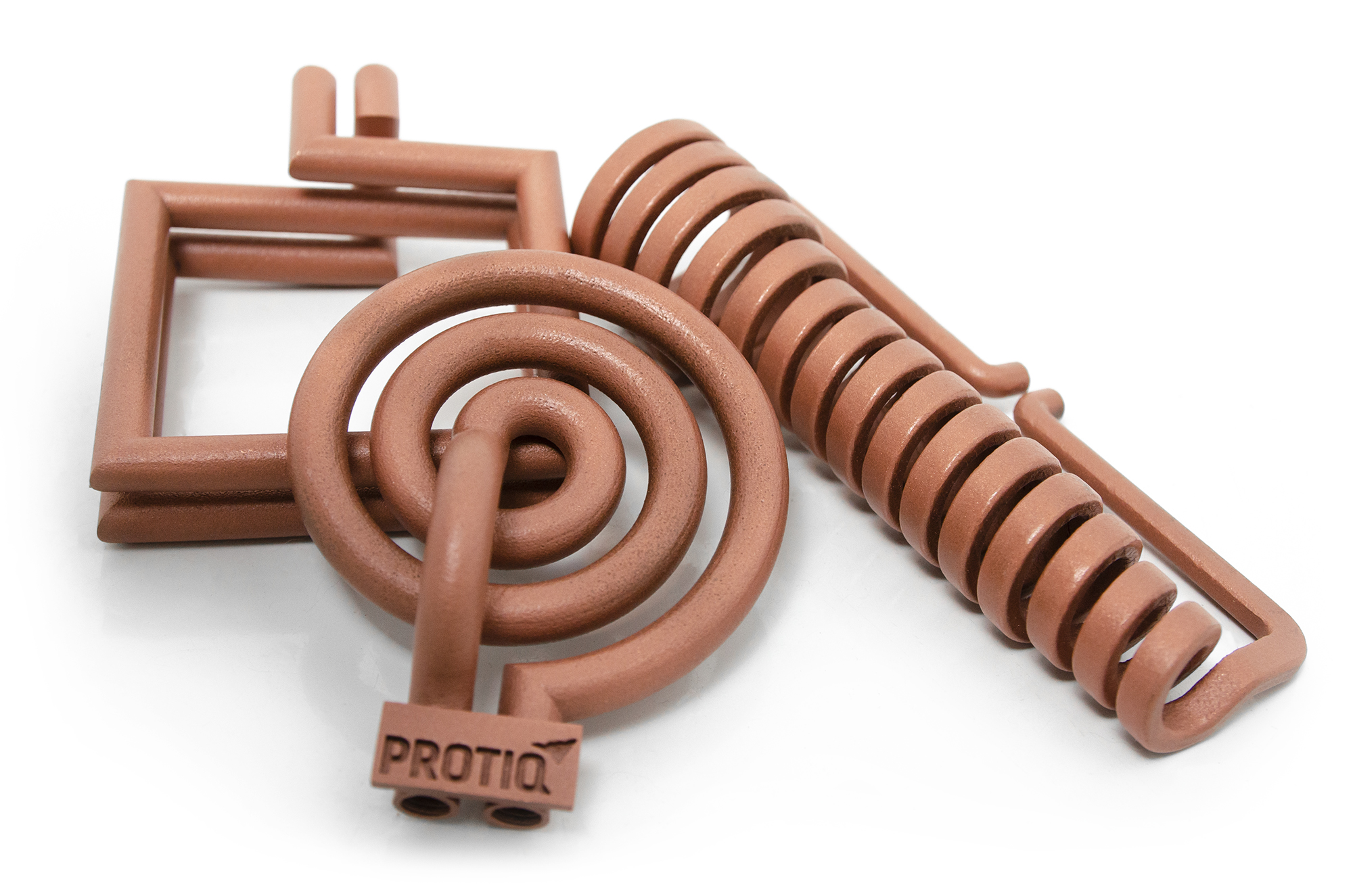
Brass & zinc
Brass and zinc: RS brass and Zamak 5
With RS brass and the zinc alloy Zamak 5, PROTIQ manufactures two materials that are otherwise rarely available in laser melting.
- RS brass: PROTIQ is the only company worldwide that manufactures brass using laser melting. The material achieves a tensile strength of 310 MPa and a hardness of 100–109 HV10 – for technical parts as well as for parts with a gold-colored look.
- Zamak 5: PROTIQ was the first 3D printing service provider worldwide to successfully process the zinc alloy Zamak 5 additively. This means prototypes and small series can be made in the production material used in zinc die casting – without tooling.

Steel
Stainless steel and tool steel
Steels are particularly versatile in laser melting: stainless steels for corrosion-resistant parts, tool steel for hard, wear-resistant inserts.
- Stainless steel 1.4404 (316L): austenitic, corrosion-resistant stainless steel with high toughness – elongation at break of at least 30 %.
- Stainless steel 1.4540 and 1.4542: precipitation-hardening stainless steels that achieve high strength after heat treatment, at least 1,340 MPa for 1.4540.
- Tool steel 1.2709: maraging steel with a tensile strength of 2,030 MPa and 53 HRC after heat treatment – for example for tool inserts with cooling channels.
Aluminum
Aluminum: AlSi10Mg
AlSi10Mg is the standard alloy for aluminum in laser melting: lightweight, strong and with good thermal conductivity.
With a density of 2.67 g/cm³, AlSi10Mg weighs only about a third as much as steel. Its tensile strength is 410 MPa as built, and its thermal conductivity is 103 W/(m·K). Typical applications are lightweight parts, housings and parts that need to dissipate heat.
↑ Back to overviewProperties
What are the properties of the metals?
The table shows the key properties of the metals from PROTIQ production. Where two values are given, the first refers to the as-built condition and the second to the condition after heat treatment.
Please select at least one material.
| Property | Pure copper | RS copper | CuCr1Zr | RS brass | Zamak 5 | Stainless steel 1.4404 (316L) | Stainless steel 1.4540 | Stainless steel 1.4542 | Tool steel 1.2709 | AlSi10Mg |
|---|---|---|---|---|---|---|---|---|---|---|
| Mechanical properties | ||||||||||
| Densityg/cm³ | 8.9 | 8.7–8.9 | 8.8–8.9 | 8.2–8.6 | 6.2–6.4 | 7.9 | 7.7 | 7.7–7.8 | 8–8.1 | 2.67 |
| Tensile strengthMPa | 220 / – | – / 220 | – / 220 | 310 / – | 218 / – | 670 / – | 1,200 / min. 1,340 | 1,100 / 1,150 | 1,100 / 2,030 | 410 / 340 |
| Yield strength Rp0.2MPa | 140 / – | – / 165 | – / 170 | 260 / – | 185 / – | 570 / – | 950 / min. 1,200 | 750 / 1,050 | 1,000 / 1,950 | 250 / 220 |
| Elongation at break% | 50 / – | – / 20 | – / 25 | 8 / – | 1.5 / – | min. 30 / – | 17 / min. 10 | 13 / 18 | 9 / 4 | 6 / 7 |
| Hardness | 61–66 HV10 | 62–71 HV10 | 62–71 HV10 | 100–109 HV10 | 61–64 HV10 | 85 HRB | 30–35 / min. 40 HRC | 35 / approx. 40 HRC | 33–37 / 53 HRC | 120 HBW |
| Minimum wall thicknessmm | 0.6 | 0.6 | 0.6 | 0.6 | 0.6 | 0.4 | 0.4 | 0.4 | 0.4 | 0.6 |
| Thermal and electrical properties, surface | ||||||||||
| Thermal conductivityW/(m·K) | 415 ± 10 | 265 | 260 | – | 85 | – | 13.7 / 15.7 | – | – | 103 |
| Electrical conductivityMS/m | 58 | 51 / 32 (edge / core) | 49 / 32 (edge / core) | 8 | – | – | – | – | – | – |
| Roughness Ra / Rz after sandblastingµm | 8–9 / 40–50 | 8–9 / 40–50 | 8–9 / 40–50 | 7–9 / 40–50 | 4–6 / 25–35 | 3–7 / 20–40 | 5 / 25 | 2.5–4.5 / 15–40 | 4–6.5 / 20–50 | 7–10 / 50–60 |
Values from the PROTIQ material data sheet (as of 08/2026), mostly without the ranges given; no properties are guaranteed. Mechanical properties may vary depending on the orientation of the test specimens (X, Y, Z) and the exposure parameters, roughness and accuracy depending on part geometry and dimensions. The accuracy is ± 0.1 mm or ± 0.7 %. The thermal and electrical conductivity values of RS copper and CuCr1Zr apply after heat treatment. The data sheet in the ordering process is binding.
Selection
Which metal suits my application?
What matters is the property your part needs most. The overview matches typical requirements to suitable materials.
| Requirement | Suitable materials |
|---|---|
| High electrical conductivity | Pure copper; with higher strength, CuCr1Zr or RS copper |
| High thermal conductivity | Pure copper, CuCr1Zr, RS copper, AlSi10Mg |
| Low weight | AlSi10Mg |
| Corrosion resistance | Stainless steel 1.4404 (316L), 1.4540, 1.4542 |
| High strength and hardness | Tool steel 1.2709, stainless steel 1.4540 and 1.4542 after heat treatment |
| Prototype in the production material used in zinc die casting | Zamak 5 |
| Gold-colored look | RS brass |
Not sure which material is right? The material finder filters by properties – or contact us directly.
↑ Back to overviewOther metals
What other metals are available on the PROTIQ Marketplace?
In addition to the materials from PROTIQ production, other manufacturers on the PROTIQ Marketplace offer metals for laser melting – for example titanium, magnesium or the stainless steel CX.
You can see which materials are currently available in the configurator after uploading your 3D file. The manufacturer’s data sheet is also linked there for each offer, because the machine and process parameters affect the properties.
For very small, delicate metal parts, Lithography-based Metal Manufacturing (LMM) is another option, and for prismatic parts with tight tolerances, CNC machining. If a material cannot be selected directly, just send us a request.
↑ Back to overviewOrdering
How do I order metal parts?
You order metal parts directly on the PROTIQ Marketplace – with a live price and a free choice of manufacturer.
- Upload 3D fileUpload your 3D model. The system automatically checks whether the part fits into the build volume.
- Choose the materialChoose the metal and, if offered, heat treatment and finishing.
- Compare offersCompare prices and production times and choose your manufacturer yourself.
- OrderOrder directly online or download a binding PDF quote.
FAQ
Frequently asked questions about metals in 3D printing
Which metals can be 3D printed?
Selective laser melting can process copper and copper alloys, brass, zinc, stainless and tool steel, aluminum, titanium and magnesium, among others. You can see which metals are currently available on the PROTIQ Marketplace in the configurator after uploading your 3D file.
Which metals does PROTIQ manufacture itself?
In Blomberg, PROTIQ manufactures parts from pure copper, CuCr1Zr, RS copper, RS brass, Zamak 5, the stainless steels 1.4404, 1.4540 and 1.4542, the tool steel 1.2709 and the aluminum alloy AlSi10Mg. Other metals are offered by other manufacturers on the PROTIQ Marketplace.
How strong are 3D-printed metal parts?
Laser-melted metal parts achieve strengths comparable to those of conventionally manufactured parts. Tool steel 1.2709, for example, reaches a tensile strength of 2,030 MPa after heat treatment, and AlSi10Mg 410 MPa as built. The properties depend on the material, heat treatment and build direction.
Can 3D-printed metal parts be post-processed?
Yes. Laser-melted metal parts can be heat-treated, blasted, polished and machined, for example at fits, threads or sealing surfaces. You can see which options are offered in the configurator; further post-processing is possible on request.
Are 3D-printed metal parts media-tight?
Laser-melted parts are very dense. Media-tight parts made of pure copper, CuCr1Zr or RS copper are possible from a wall thickness of approx. 1 mm, for example for inductors with cooling channels.
How thin can the walls of metal parts be?
For the materials from PROTIQ production, the minimum wall thickness is 0.4 to 0.6 mm, depending on the metal. For media-tight parts made of copper materials, walls should be approx. 1 mm thick.
How accurate are 3D-printed metal parts?
For the metals from PROTIQ production, the accuracy is ± 0.1 mm or ± 0.7 %. Tighter tolerances on functional surfaces can be achieved by machining.
Where can I find the data sheets for the metals?
You can find the valid data sheets in the ordering process: after you upload your 3D file, the manufacturer’s data sheet is linked to each offer.