What used to sound like science fiction is now industrial reality: metal components are created layer by layer from powder - without molds, without milling, without limits in design. 3D printing with metal enables new applications, individual geometries and efficient production from a quantity of one. But how does it actually work? Which materials are suitable? And what are the special technical features? We answer the most frequently asked questions.
Which metals can be used in 3D printing?
In principle, numerous metals can be processed in 3D printing. The material portfolio includes a variety of steels, light metals such as aluminum and even precious metals.
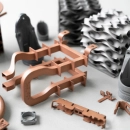
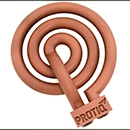
Even unusual materials such as high-purity copper or zinc alloys can now be additively manufactured. PROTIQ is the first 3D printing service provider to have succeeded in processing 100% pure copper using selective laser melting. The zinc alloy Zamak 5 can also be 3D printed thanks to a process developed by PROTIQ. These innovations open up completely new fields of application - from highly conductive copper coils in electrical engineering to fast prototypes made of zinc without expensive casting molds.
More about 3D printing with copper >
More about 3D printing with zinc >
For an overview of all the metal materials we have available, simply upload a 3D file to our homepage and then select the "Metals" filter.
What are the advantages of additively manufactured metal parts compared to conventional processes?
Additive manufacturing of metal parts offers several advantages over conventional processes:
Fast production time: Components can be manufactured much more quickly as there is no need for tools or molds, for example. This speeds up prototyping and small series considerably.
Individual geometries: Each part can be customized or manufactured uniquely. Changes to the design only require the adaptation of CAD data, not an entire tool.
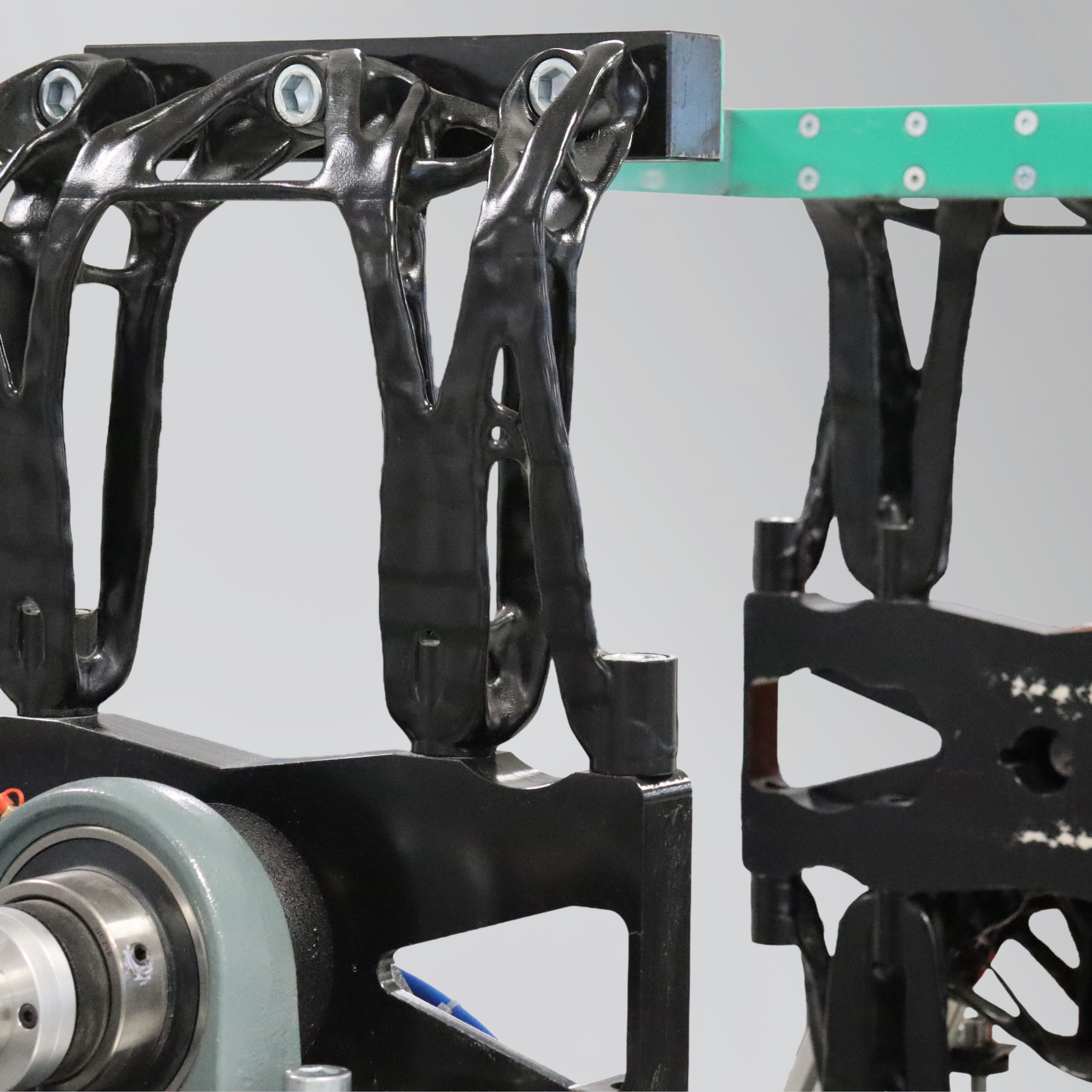
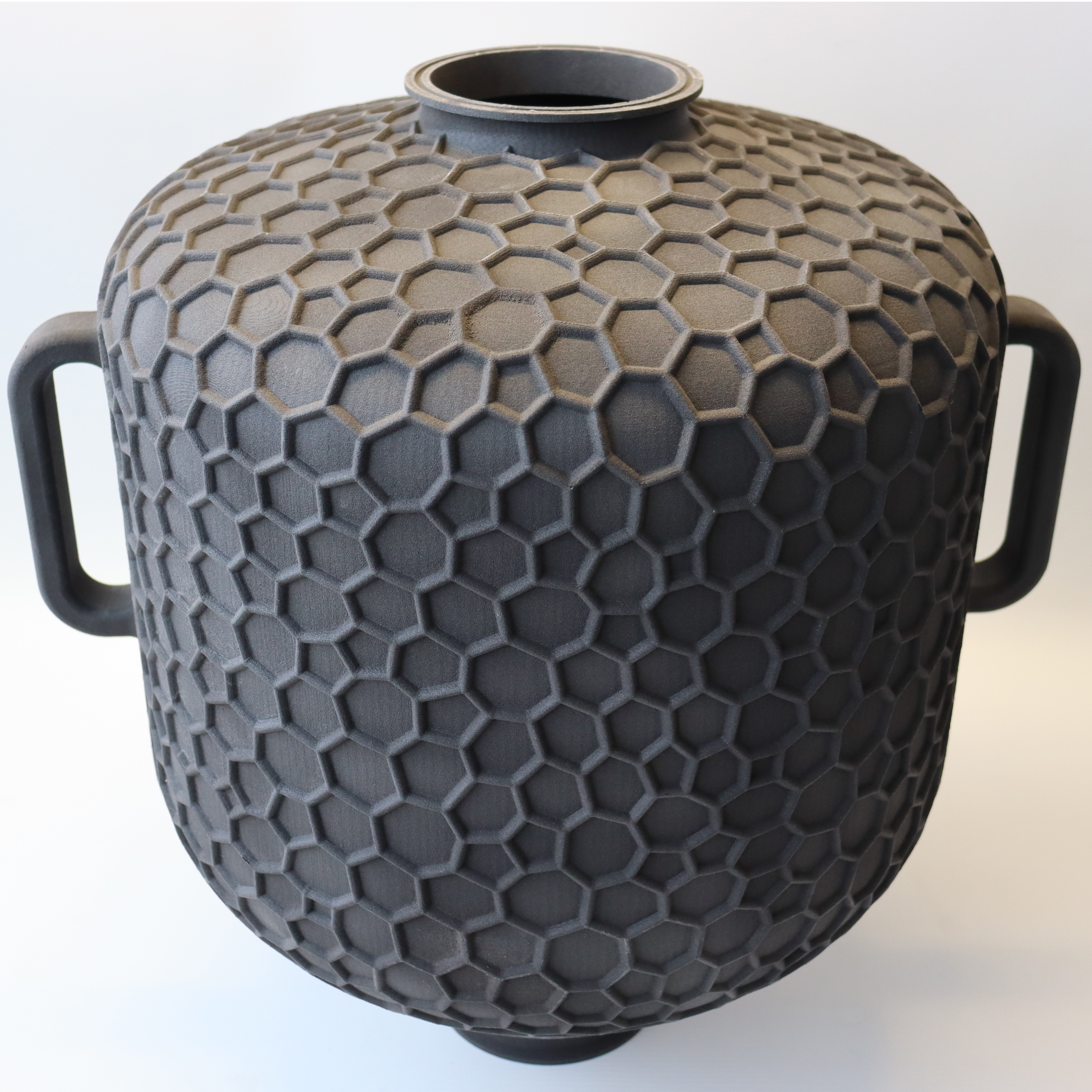
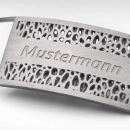
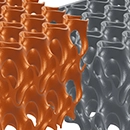
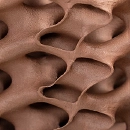
High degree of design freedom: Additive technologies enable shaping that cannot be achieved with traditional production methods. Even highly complex geometries - such as internal cavities, grid structures or organic free-form surfaces - can be realized using 3D printing.
Functional integration: The layered structure allows several component functions to be combined in one piece. For example, components can be printed with internal channels for cooling or cables directly "from a single cast", which reduces assembly costs.
These points mean that additive manufacturing offers exceptional design freedom and new possibilities in product design. Designers can think in completely new directions, as 3D printing goes beyond the restrictions of traditional manufacturing. The aforementioned advantages really come into their own when it comes to small batch sizes or very complex parts.
How does the SLM process work?
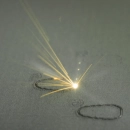
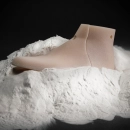
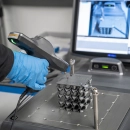
Selective laser melting (SLM) is one of the most important processes for metal 3D printing. The components are built up layer by layer from fine metal powder. A coater spreads a thin layer of powder on a build platform. A powerful laser then melts the particles of this layer that belong to the component - under an inert gas atmosphere to prevent oxidation. This selective melting gradually creates the three-dimensional metal component. Unmelted powder can be removed at the end of the process and most of it can be reused.
The SLM process (also known as selective laser melting or DMLS) enables the production of extremely dense and resilient metal parts. Depending on the machine and material, layer thicknesses of approx. 20-50 µm can be realized, which enables a correspondingly fine resolution of the details. You can find more information about this process on our process page.
Are there any fundamental limitations to metal 3D printing?
As with any production technology, there are certain limitations and special features to consider when 3D printing with metal:
Component size: Additively manufactured metal parts are currently limited by the build volume of the machines. Objects can only be printed in one piece up to a certain maximum size. Larger components may have to be divided into segments and subsequently assembled.
Surface roughness: SLM parts have a slightly rough surface due to the process. For high surface quality requirements (e.g. for visible parts or mold inserts for injection molding tools), post-processing is therefore usually necessary - for example by sandblasting, grinding or polishing to achieve a smooth surface.
Tolerances & reworking: The achievable dimensional tolerances are typically in the range of ±0.1-0.2 mm, depending on the material and system. Threads or fits are often printed with oversize and then brought to final dimensions by drilling or cutting. Support structures, which are necessary for production, must also be removed after printing and the attachment points smoothed.
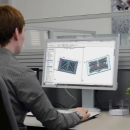
Design guidelines: To achieve optimum results, certain design rules should be followed. We have summarized the most important design recommendations for selective laser melting for you.
There you will find detailed information on how to design components so that 3D printing runs smoothly and economically. If you are unsure, our team will also be happy to help.


 Deutsch
 English
 Italiano






.jpg)