


 Deutsch
 English
 Italiano


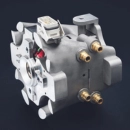
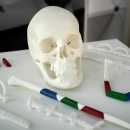




3D Printing
What Is 3D Printing?
3D printing, also known as additive manufacturing, is a production process in which components are built layer by layer from digital 3D data. Unlike conventional manufacturing methods, where material is milled, drilled or cast, for example, a component is created only where it is needed.
The process is based on a digital 3D model created using CAD software or imported from existing design data. This model is then divided into numerous thin layers, which are built one after another by the 3D printer. This approach makes it possible to manufacture everything from simple prototypes to complex functional and production parts made of plastic or metal.
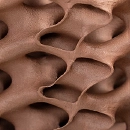
3D printing is particularly valuable for components that would be difficult or even impossible to produce using conventional manufacturing methods. Examples include internal channels, lattice structures, functionally integrated components and customized products. At the same time, the technology enables tool-free manufacturing, reducing development times and allowing modifications to be implemented quickly.
Today, 3D printing is used across a wide range of industries – from product development and mechanical engineering to medical technology, architecture, and aerospace. The technology has long evolved from a prototyping tool into an established industrial manufacturing method.
Additive Manufacturing at a Glance
- Manufacturing directly from digital 3D data
- Layer-by-layer production of components
- No tools or molds required
- Suitable for prototypes, functional parts and production applications
- High design freedom
- Customization without additional tooling costs
How Does 3D Printing Work?
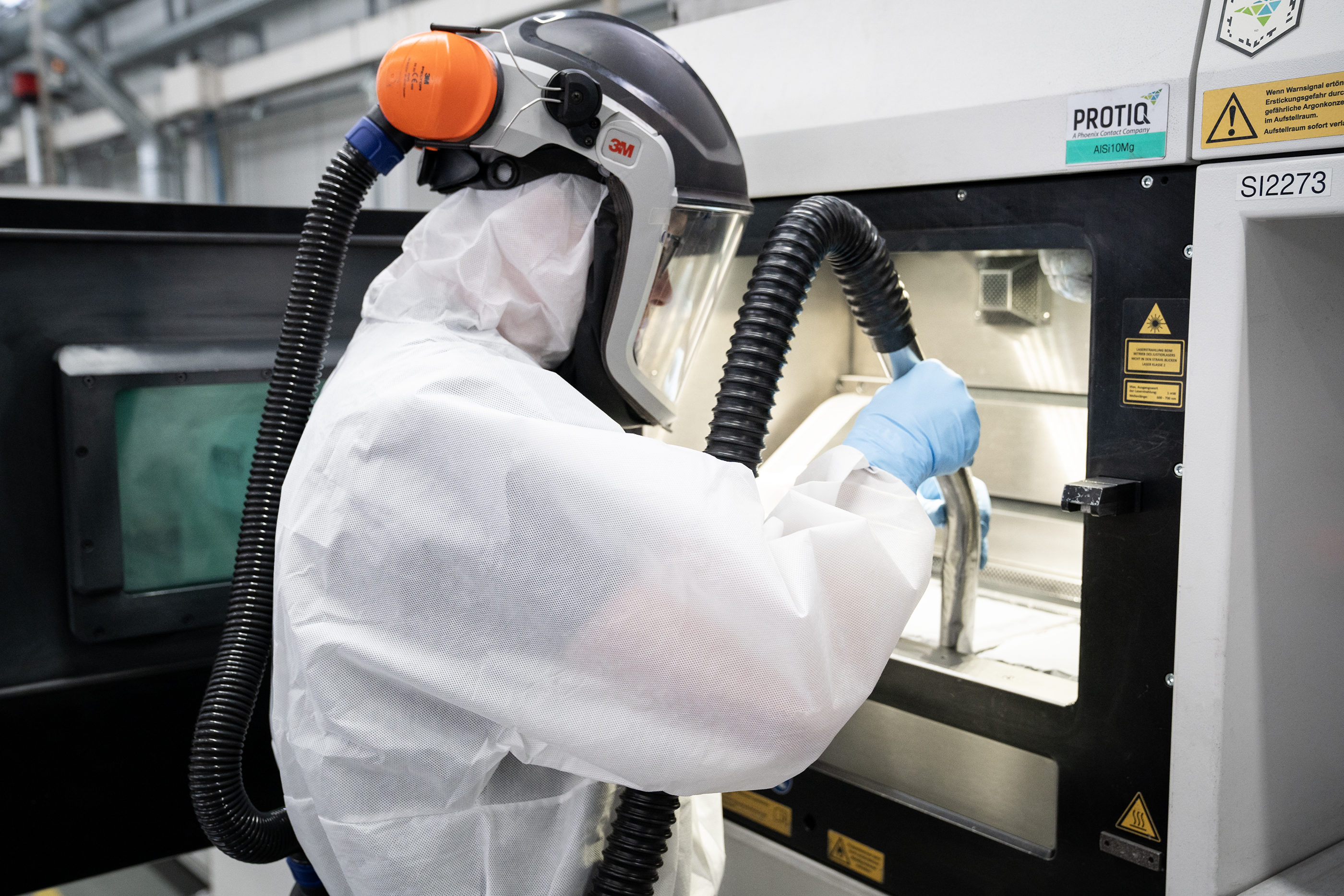
In 3D printing, a component is created layer by layer based on a digital 3D model. Unlike conventional manufacturing methods, material is not removed or cast into a mold but is selectively deposited or solidified exactly where the final component is intended to be.
Both industrial 3D printing and consumer-grade 3D printing are based on this additive principle. However, the processes, materials and achievable component properties can differ significantly. While filament printers (FDM) are commonly used in the consumer sector for simple models, housings and prototypes, industrial manufacturing relies on advanced technologies such as Selective Laser Sintering (SLS), Stereolithography (SLA) and Selective Laser Melting (SLM). These technologies enable the production of precise plastic and metal components for engineering applications, prototypes, small production runs and serial manufacturing.
The exact workflow depends on the specific process used, but generally follows the same basic steps.
3D Printing Explained
In 3D printing, a component is not machined from a solid block of material but built layer by layer. This makes it possible to manufacture complex geometries, customized parts and small production runs cost-effectively in many applications.
1. Component Design
2. Data Preparation
3. Additive Manufacturing
4. Post-Processing
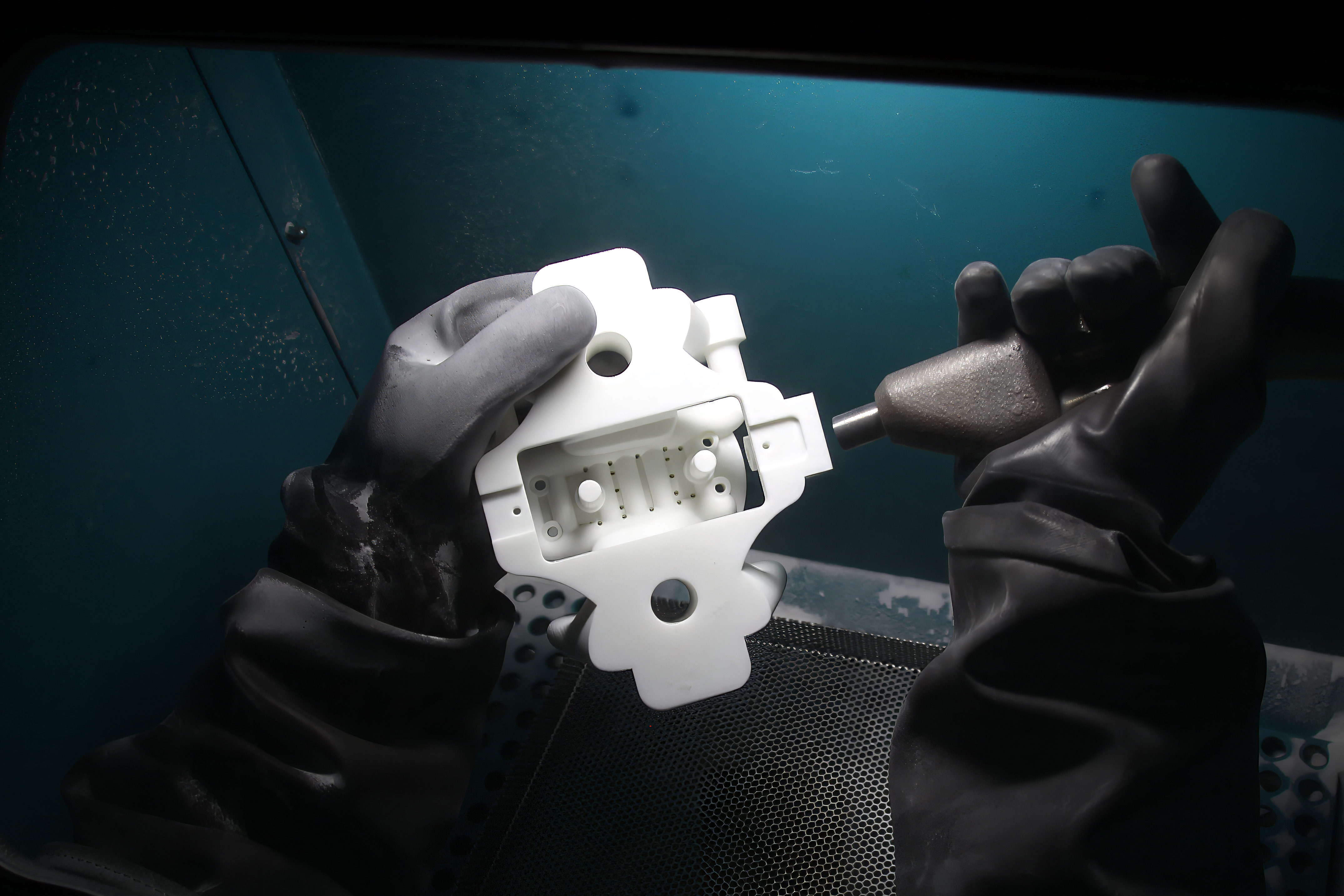
Once printing is complete, the component is removed from the machine and processed further. Depending on the manufacturing technology, excess powder may be removed, support structures detached, or surfaces refined.5. Quality Inspection and Application
After post-processing, the component is inspected and can then be used as a prototype, functional part, spare part or production component.The 3D Printing Process at a Glance
- Create a 3D model
- Prepare print data
- Manufacture the component layer by layer
- Post-processing
- Inspect and use the component
The History of 3D Printing

The Evolution of 3D Printing at a Glance
-
1980s: Development of the First Additive Manufacturing Technologies
The foundations of modern 3D printing were established in the 1980s. During this period, the first technologies emerged that enabled components to be built layer by layer from digital data. Processes such as Stereolithography (SLA) laid the groundwork for additive manufacturing and made it possible for the first time to produce models directly without the need for conventional tooling. -
1990s: Primarily Used for Rapid Prototyping
In the 1990s, companies mainly used 3D printing for the rapid production of prototypes. Development teams were able to test and optimize products much faster, as initial models could be produced within hours or days. As a result, development cycles and innovation processes were significantly accelerated. -
2000s: Growth of Industrial Plastic and Metal Processes
As the technologies matured, processes for an increasing range of plastics and metals became available. Component quality continued to improve, while larger machines and new materials enabled broader industrial adoption. 3D printing became an increasingly important part of modern manufacturing processes. -
2010s: Functional Parts, Small Production Runs and Spare Parts
During the 2010s, 3D printing evolved from a pure prototyping technology into a recognized production method. Companies increasingly manufactured durable functional parts, small production runs and customized spare parts using additive manufacturing. In particular, the high degree of design freedom and the cost-effective production of smaller quantities made the technology highly attractive. -
Today: An Established Manufacturing Technology for Prototypes, Production Applications and Customized Products
Today, 3D printing is an integral part of industrial manufacturing across many industries. The technology is used for prototypes, tooling, production parts and customized products. At the same time, new materials, automated production processes and digital supply chains continue to expand the possibilities of additive manufacturing.
Which 3D Printing Technologies Are Available?
The term 3D printing encompasses a range of additive manufacturing technologies. These processes differ in the materials they use, the component properties they can achieve and their typical fields of application. The most suitable process depends on factors such as strength requirements, level of detail, surface quality and production volume.
While filament-based printers (FDM) are commonly used in the consumer sector, industrial manufacturing primarily relies on technologies designed for functional plastic and metal components. Below is an overview of the most widely used manufacturing processes. You can find an overview of all technologies available through us here:
Selective Laser Sintering (SLS)
Selective Laser Sintering (SLS) is one of the most important industrial technologies for manufacturing plastic components. In this process, a laser fuses plastic powder layer by layer into a solid part.
Because the surrounding powder supports the component during the printing process, even complex geometries can be produced without additional support structures. SLS is particularly suitable for functional prototypes, engineering plastic parts and small production runs.
Typical Benefits
- High design freedom
- Durable, functional components
- No support structures required
- Suitable for prototypes and production applications
Selective Laser Melting (SLM)
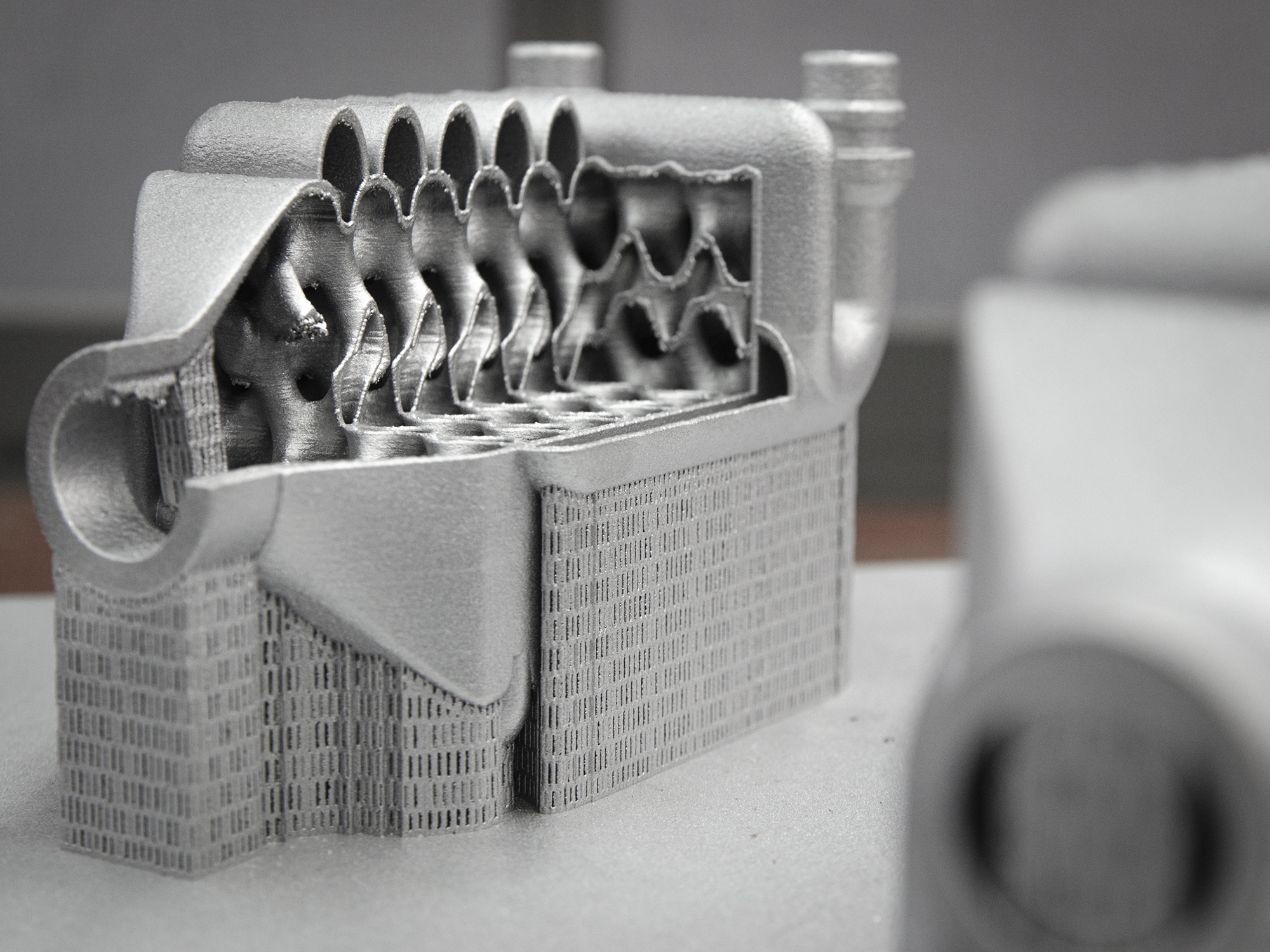
In Selective Laser Melting (SLM), fine metal powders are fully melted using a laser. This process creates dense metal components with excellent mechanical properties.
The technology enables the production of complex metal components that would often be difficult to manufacture using conventional methods. Typical applications can be found in mechanical engineering, aerospace and medical technology.
Typical Benefits
- High-strength metal components
- Complex geometries and internal channels
- Functional integration within a single component
- Suitable for prototypes and production parts
Stereolithography (SLA)
Stereolithography (SLA) is one of the oldest 3D printing technologies. In this process, liquid photopolymer resin is cured layer by layer using light.
SLA enables exceptionally fine details and smooth surface finishes. The technology is frequently used for design models, visual prototypes and components with high requirements for accuracy and detail.
Typical Benefits
- Very high resolution
- Fine details
- Smooth surfaces
- Ideal for design and presentation models
Fused Deposition Modeling (FDM)
FDM is the most widely known 3D printing technology in the hobby and desktop segment. In this process, a thermoplastic filament is melted and deposited layer by layer.
The technology is well suited for simple prototypes, models and initial functional concepts. In industrial environments, FDM is primarily used for specific development, tooling and support applications.
Typical Benefits
- Low investment costs
- Fast production of simple models
- Wide range of available materials
- Widely established technology
The Benefits of 3D Printing
3D printing offers companies new opportunities for developing and manufacturing components. The layer-by-layer manufacturing approach provides design freedoms that are difficult or impossible to achieve with many conventional production methods. At the same time, development cycles can be shortened, tooling costs avoided and products brought to market more quickly.
Which benefits are most relevant depends on the specific application, production volume and technical requirements.
High Design Freedom
No Tooling Costs
Shorter Development Cycles
Cost-Effective for Low Production Volumes
Customization Without Additional Effort
Functional Integration
Digital Inventory and On-Demand Spare Parts
Potential for More Sustainable Manufacturing
Is 3D Printing Always the Best Choice?
Despite its advantages, 3D printing is not the optimal solution for every application. For very high production volumes, manufacturing processes such as injection molding may be more cost-effective. The choice of the most suitable manufacturing method always depends on factors such as production volume, geometry, material requirements and the overall cost structure.
What Is 3D Printing Used For?
3D printing has evolved from a technology primarily used for rapid prototyping into a versatile manufacturing method. Today, additive manufacturing technologies are used across a wide range of industries – from product development and production to spare parts supply. 3D printing is particularly valuable wherever complex geometries, low production volumes, short development cycles or customized solutions are required.
Rapid Prototyping
One of the most well-known applications of 3D printing is rapid prototyping. Development teams can produce physical models of new products within just a few days and test them at an early stage. This makes it possible to evaluate designs more quickly, identify optimization opportunities and shorten development cycles.
Functional Parts and Small Production Runs
Modern 3D printing technologies enable the production of durable plastic and metal components for real-world use. As a result, many companies use additive manufacturing not only for prototypes, but also for functional parts and small production runs.
Serial Production
3D printing is also becoming increasingly important in serial production. This is particularly true when components need to be customized or when conventional tooling-based manufacturing is not economically viable. Typical examples include personalized products, complex lightweight structures and functionally integrated components.
Tools and Fixtures
Companies frequently use 3D printing to manufacture assembly aids, clamping fixtures, inspection gauges and production tools. Tool-free manufacturing enables short lead times and rapid adaptation to new production requirements.
Spare Parts and Digital Inventory
With 3D printing, spare parts can be manufactured on demand without the need to keep physical inventory in stock. Instead of maintaining large inventories, digital design files are stored and produced whenever required. This can improve availability while reducing inventory costs.
Customized Products
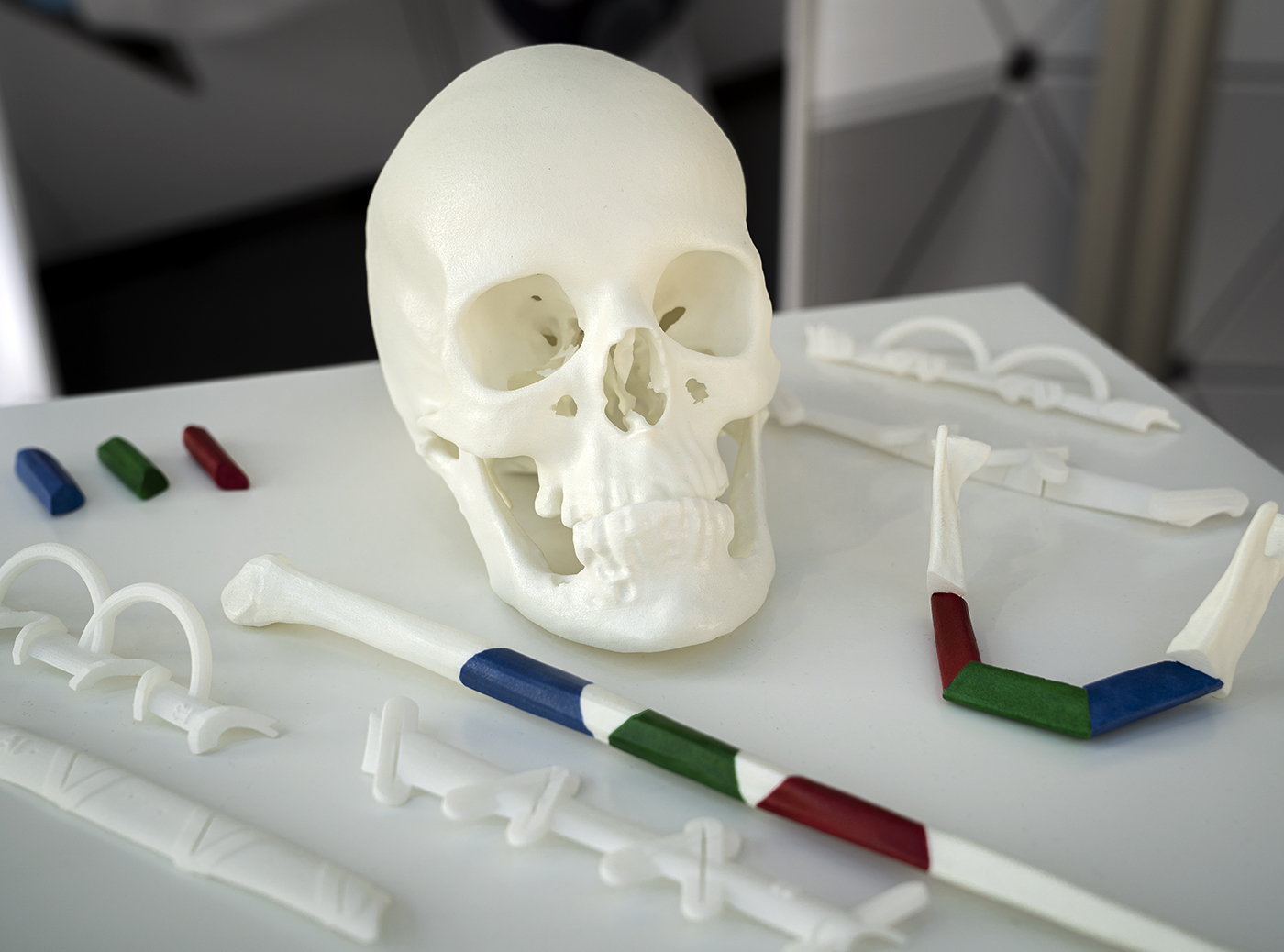
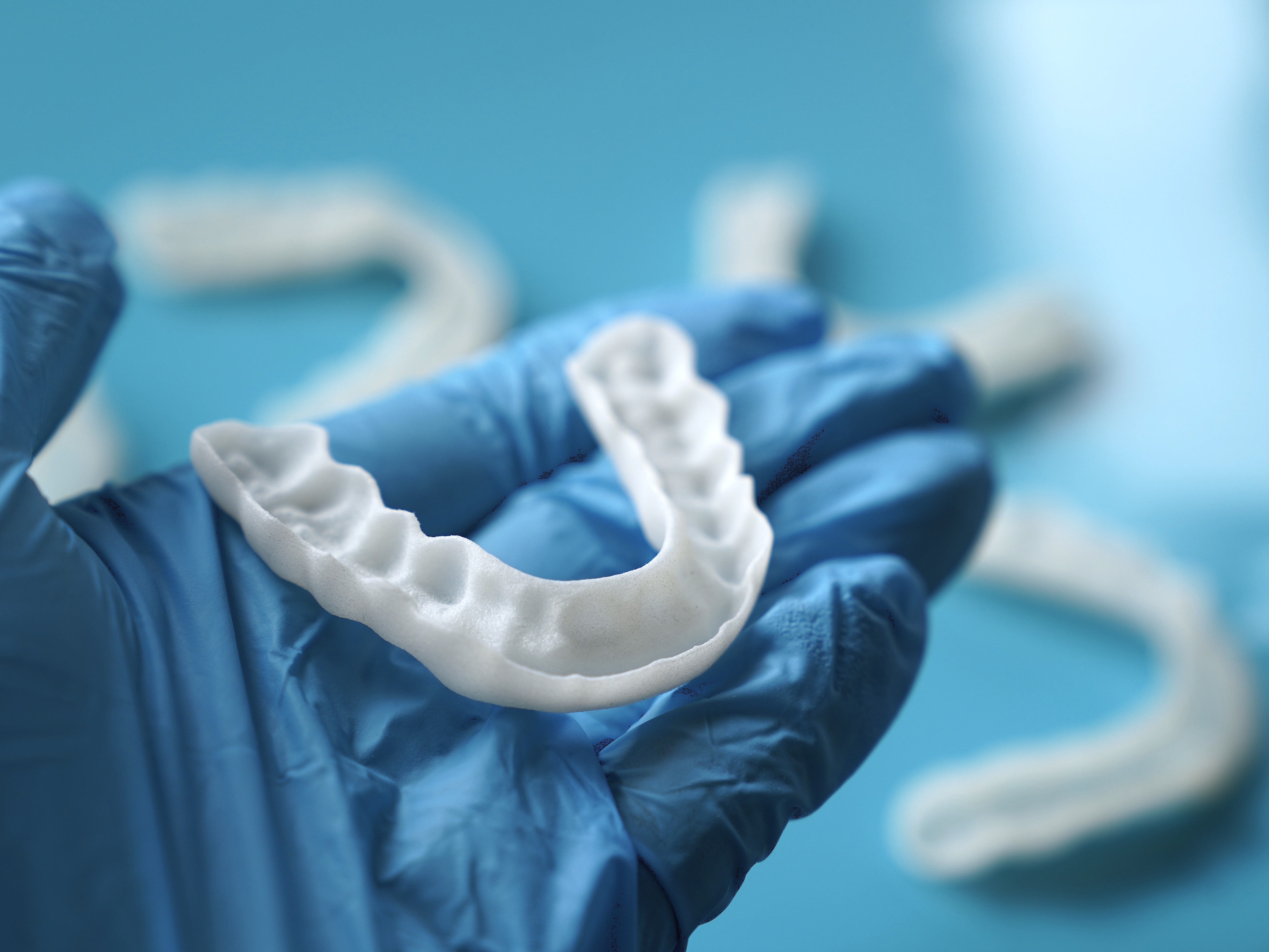
Because every component is produced directly from digital data, customized variations can be manufactured without additional tooling costs. This makes 3D printing particularly suitable for personalized products, customer-specific modifications and small production runs with a high degree of variation.
Lightweight Design and Functional Integration
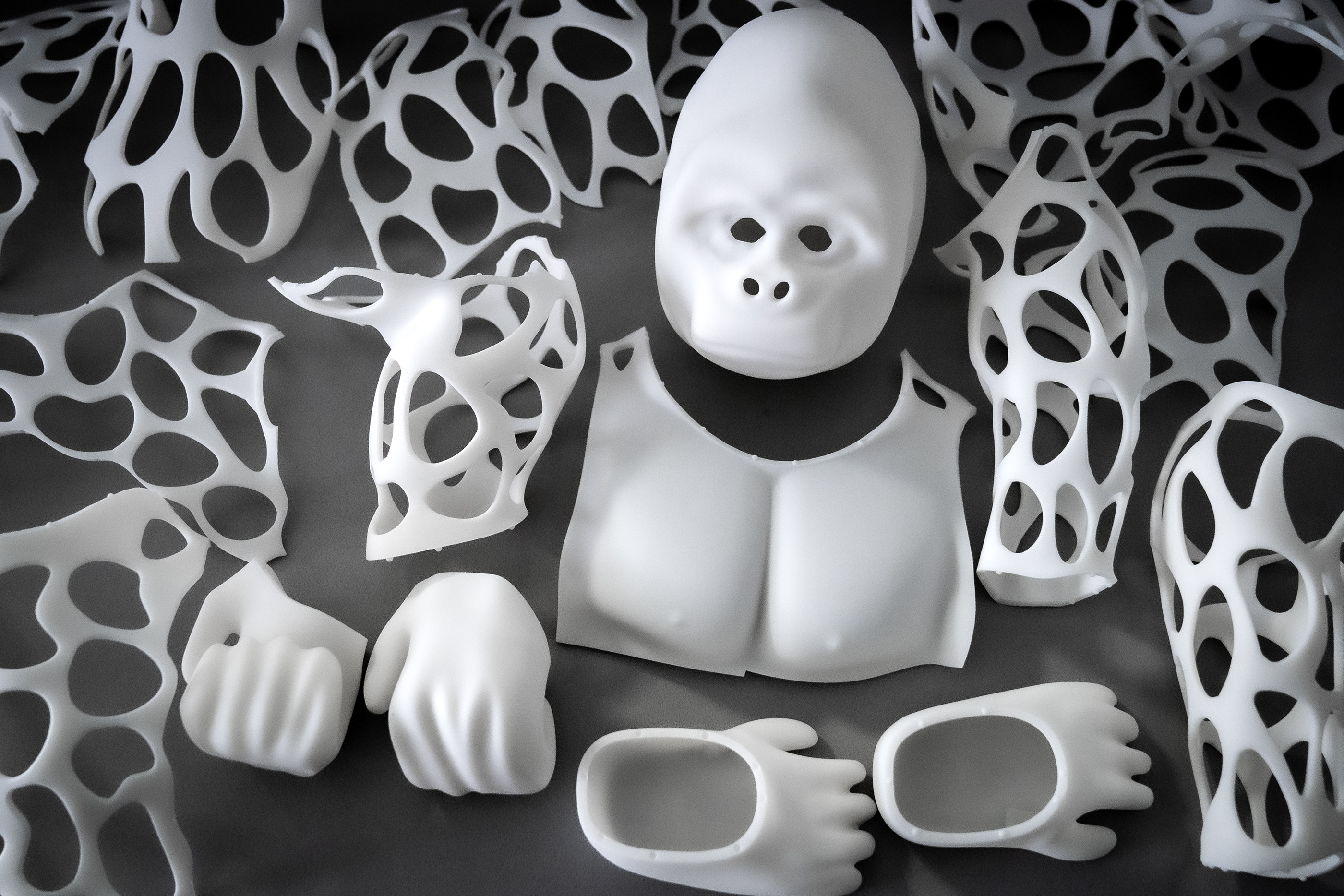
Additive manufacturing enables designs that would be difficult to achieve using conventional production methods. Examples include lattice structures, internal channels and components that combine multiple functions within a single part. As a result, weight can be reduced and assemblies simplified.
Architectural Models and Visual Prototypes
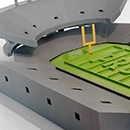
Architecture firms, designers and development teams use 3D printing for presentation models, trade show exhibits and design studies. Complex shapes can be produced quickly and presented in a highly realistic and tangible way.
In addition, there are numerous applications and industries where 3D printing can demonstrate its strengths. From product development and spare parts manufacturing to customized solutions for mechanical engineering, electronics, medical technology, architecture and energy technology, additive manufacturing opens up new possibilities for efficient, flexible and cost-effective production processes. Depending on the application, companies benefit from shorter development cycles, greater design freedom and on-demand manufacturing without high tooling costs. Explore the wide range of industrial 3D printing applications in our overview of application areas.

What Are the Benefits of a Professional 3D Printing Service?
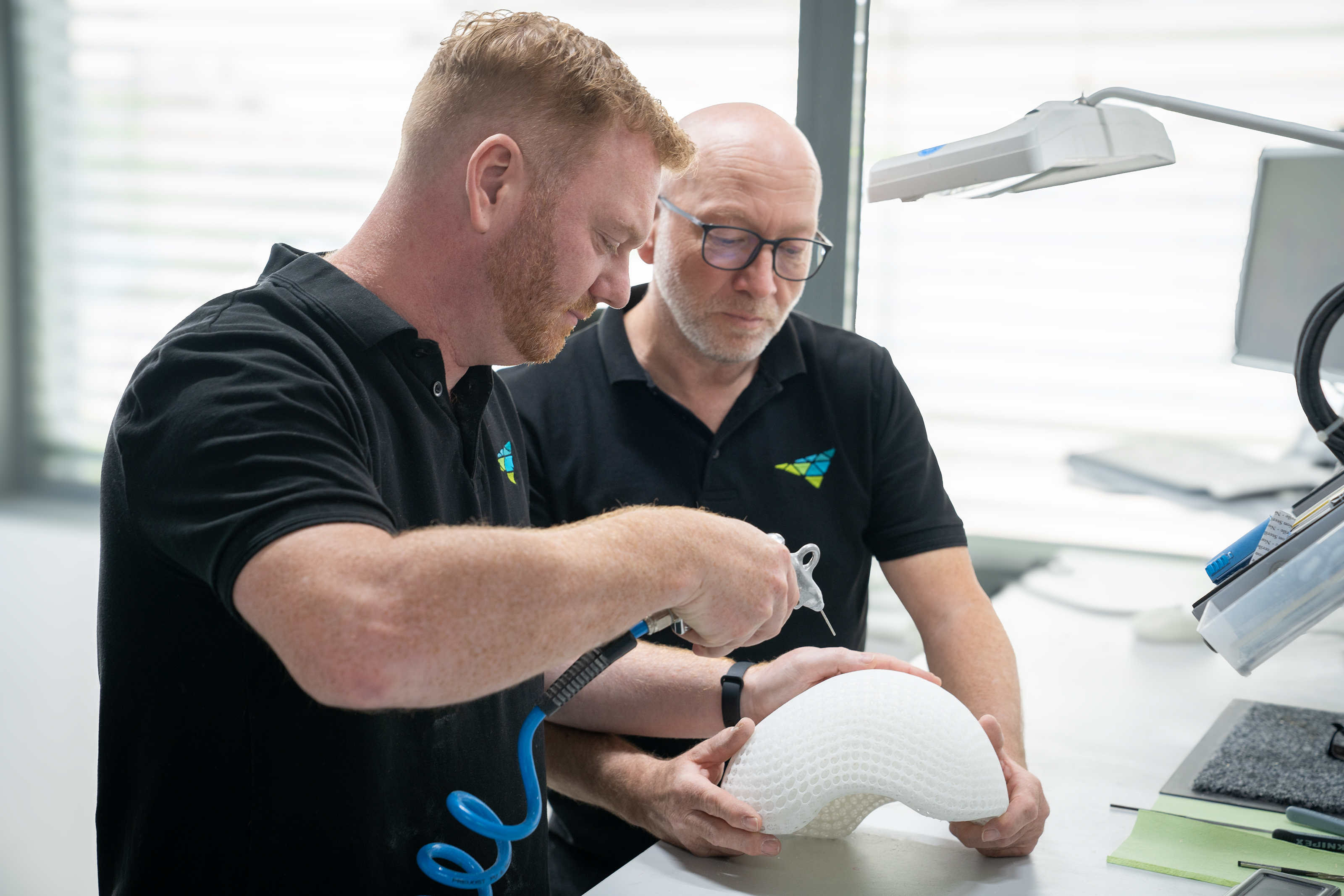
A professional 3D printing service gives companies access to industrial manufacturing technologies without the need to invest in their own equipment, specialized expertise or costly infrastructure. Instead of purchasing and maintaining expensive machines, materials and quality control systems, businesses can have components manufactured on demand and pay only for the parts they actually need.
Modern technologies such as Selective Laser Sintering (SLS), Selective Laser Melting (SLM) and Stereolithography (SLA) enable the production of high-quality plastic and metal components with consistent and reproducible properties. At the same time, customers benefit from a wide range of materials, allowing parts to be tailored to specific requirements such as strength, temperature resistance, flexibility or surface quality.
Experienced service providers also support customers in selecting the most suitable manufacturing process and provide guidance on design optimization for additive manufacturing. This helps maximize the potential of 3D printing, reduce costs and often improve component performance.
Another advantage is the high level of process reliability and consistent quality. Professional production environments, established quality standards and extensive practical experience ensure dependable results – from prototypes and functional parts to small production runs and serial manufacturing applications.
In addition, components can often be manufactured within just a few days, which is particularly beneficial for prototypes, spare parts and time-critical development projects. Professional service providers also offer the scalability needed to support projects from the first prototype through to full-scale production with a single partner.
What Should You Look for When Choosing a 3D Printing Service Provider?
For many projects, it is not immediately obvious which 3D printing service provider is the best choice. Requirements relating to materials, manufacturing technologies, lead times, build volume or component quality can vary significantly from one project to another. Therefore, comparing different providers is often worthwhile. However, researching individual service providers can quickly become time-consuming – especially when multiple manufacturing technologies or materials are under consideration.
Compare Providers Instead of Committing to One
With the PROTIQ Marketplace, you do not have to commit to a single provider from the very beginning. After uploading your 3D file, you can compare different manufacturing options directly on one platform. Depending on your component, various providers, technologies and materials may be available. This allows you to choose the solution that best matches your technical requirements, budget and preferred delivery time.
Find the Right Technology for Your Component
Not every component is suitable for every 3D printing technology. While some applications benefit from durable plastic parts, others require highly precise components or metal manufacturing. By comparing different technologies on a single platform, it becomes easier to identify and evaluate the most suitable solution for your application.
Compare Materials
Materials can vary significantly as well. Depending on the application, options may include engineering plastics, flexible materials or various metals. A broad network of manufacturing partners provides additional possibilities and makes it easier to compare different material options for the same component.
Compare Lead Times and Pricing Transparently
Lead times and pricing may differ from one provider to another. Instead of requesting quotations from multiple service providers individually, available options can be compared directly during the ordering process. This allows you to decide whether fast delivery, the best value for money or another factor is your top priority.
The Right Solution for Every Project
No single provider can offer the ideal solution for every application. That is why having access to multiple manufacturing partners is often beneficial.
With the PROTIQ Marketplace, you gain access to a network of specialized manufacturing service providers. This allows you to select the manufacturing option that best suits the requirements of each project – without having to research and compare numerous suppliers on your own.
Frequently Asked Questions About 3D Printing
What Can Be 3D Printed?
Modern 3D printing technologies can be used to manufacture prototypes, enclosures, fixtures, spare parts, functional components, metal parts, lightweight structures, architectural models and even production-ready products. The range of possible applications depends on the selected technology, material and the technical requirements of the component.
What Is the Difference Between 3D Printing and Conventional Manufacturing?
The key difference lies in the manufacturing principle. While processes such as milling or turning remove material, 3D printing builds a component additively. This gives engineers far greater design freedom and enables the creation of parts that would be difficult or costly to manufacture using conventional processes. At the same time, there is no need for tools or molds, making 3D printing particularly attractive for prototypes, spare parts, small production runs and customized products.
Why Can 3D Printing Produce Complex Geometries?
Because components are built layer by layer rather than machined from a solid block of material, it is possible to create shapes that are difficult or impossible to manufacture using many conventional production methods. Examples include lattice structures, hollow cavities, integrated cooling channels and highly optimized lightweight designs.
What Materials Can Be 3D Printed?
Different materials can be used depending on the manufacturing process. These include engineering plastics such as PA12, PA11 and TPU, as well as metals such as stainless steel, aluminum, titanium, copper and zinc. Ceramics and even glass can also be 3D printed today.
Can Metal Be 3D Printed?
Yes. Technologies such as Selective Laser Melting (SLM) can be used to manufacture metal components additively. This makes it possible to create complex geometries, internal channels and functionally integrated parts.
How Much Does 3D Printing Cost?
Costs depend on factors such as component size, material, manufacturing technology, quantity and delivery time. Therefore, it is not possible to provide a fixed price. On our platform, however, you can simply upload your component and instantly view pricing for your specific requirements from different manufacturing providers.
Can Production Runs Be Manufactured with 3D Printing?
Yes. Modern additive manufacturing technologies are increasingly used for small production runs and selected serial production applications. Whether this is economically viable depends on the component and the required production volume.
What Are the Limitations of 3D Printing?
3D printing is not the ideal solution for every application. For very high production volumes, very large components or certain surface finish requirements, conventional manufacturing technologies may offer advantages.
Can Spare Parts Be Reproduced Using 3D Printing?
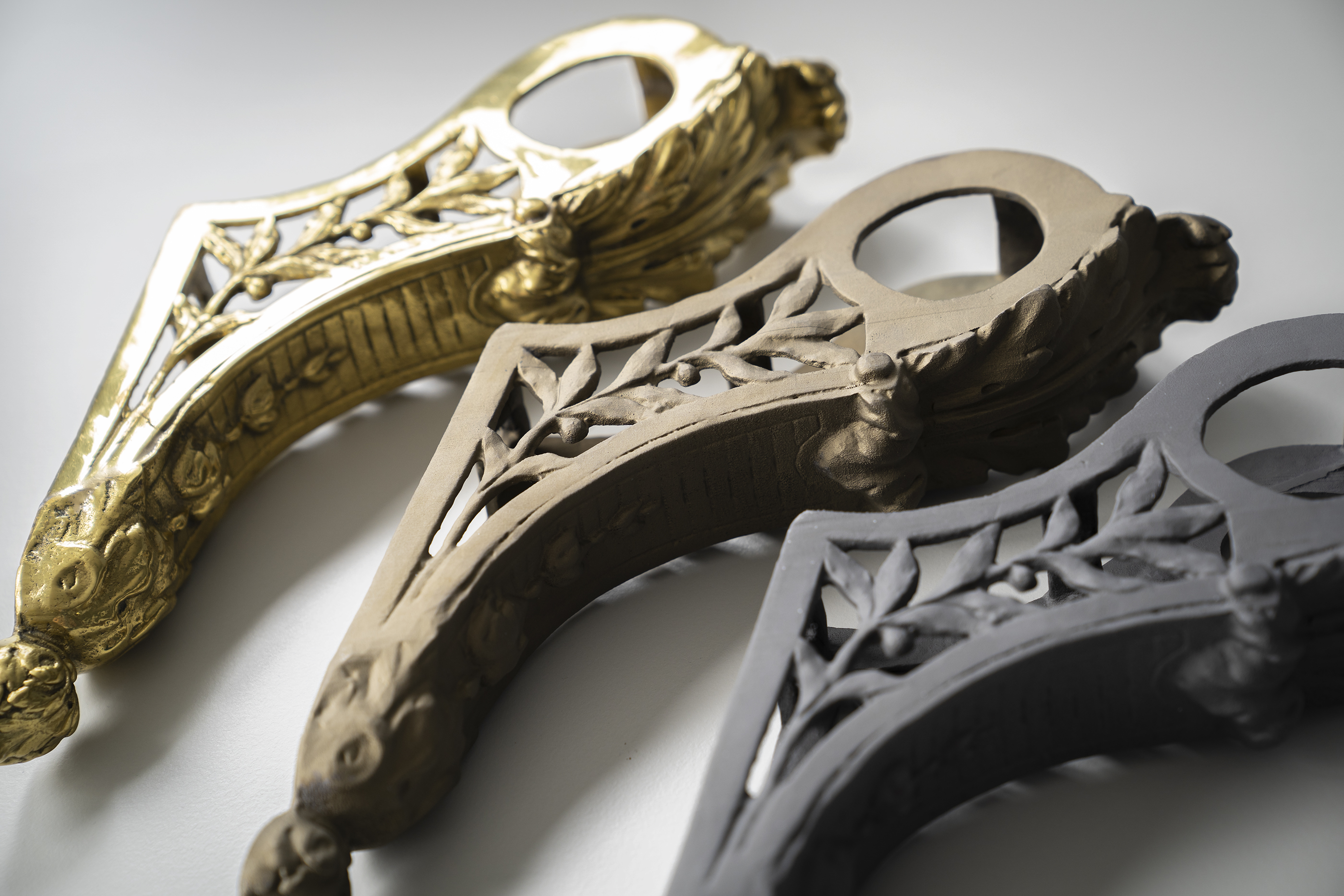
Yes. 3D printing is particularly well suited for spare parts that are no longer available, are only required occasionally or are needed in small quantities. The prerequisite is the availability of a suitable 3D model or the ability to create one. This often makes it possible to manufacture spare parts on demand without maintaining large inventories.
What Are the Benefits of a 3D Printing Marketplace?
A 3D printing marketplace allows users to compare different manufacturing options on a single platform. Instead of contacting multiple providers individually, users can compare technologies, materials, lead times and pricing directly during the ordering process and choose the solution that best fits their component. This makes selecting the right manufacturing partner much easier and more transparent.