


 Deutsch
 English
 Italiano







CNC machining
CNC machining is a subtractive manufacturing process used for the precise and automated production of complex components from a wide range of materials. Using modern control technology, the tool and the workpiece move along defined machining axes. This enables the production of parts with high dimensional accuracy and consistently reproducible quality.CNC Machining on the PROTIQ Marketplace
CNC machining is one of the most established manufacturing processes in industrial production. Subtractive processes such as turning and milling make it possible to produce components with high dimensional accuracy, defined surface quality, and from a wide range of metals and plastics. CNC processes are suitable for both individual parts and prototypes as well as series production.
On the PROTIQ Marketplace, you can easily request CNC-turned and CNC-milled components: upload your 3D data during the ordering process and select “Subtractive Manufacturing” using the filters. Depending on the scope of your project, you can also start a project inquiry or contact our team directly to coordinate your requirements together.
Request CNC machining
Submit your CNC inquiry conveniently via the PROTIQ Marketplace.
We review your requirements, coordinate the details with you, and manage the further implementation of your project.

Many years of experience and high quality standards
The PROTIQ Marketplace is designed to meet the high quality requirements of industrial applications. All connected manufacturing partners comply with defined quality criteria and have appropriate quality assurance concepts as well as relevant certifications.
Before a provider becomes part of the PROTIQ Marketplace, they go through a multi-stage qualification process. This ensures that projects are implemented reliably, reproducibly, and in the proven PROTIQ quality.
Tooling Shop of the Year
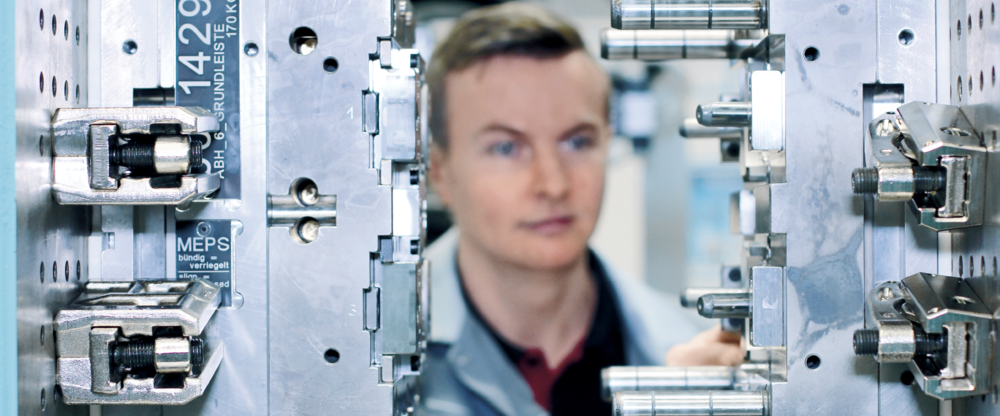
As a subsidiary of Phoenix Contact and formerly part of its internal tooling shop, PROTIQ remains closely connected to its origins. Phoenix Contact’s internal tooling shop looks back on more than 50 years of experience and is regarded as one of the best in the German-speaking region. As a participant in the renowned “Excellence in Production” competition, the tooling shop has been named overall winner and “Tooling Shop of the Year” twice, prevailing against globally renowned competitors.
CNC Manufacturing: Turning and Milling
Machining is a subtractive manufacturing process in which components are produced from a solid blank by selectively removing material. It is suitable for manufacturing precise workpieces from metal or plastic. The most important machining processes include turning and milling.
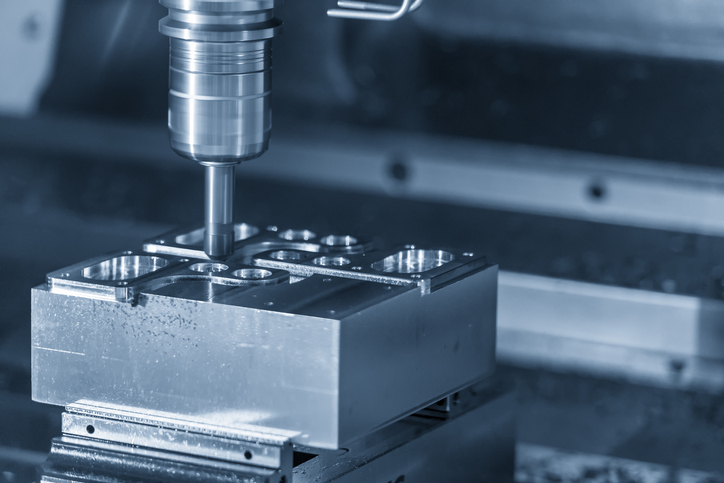
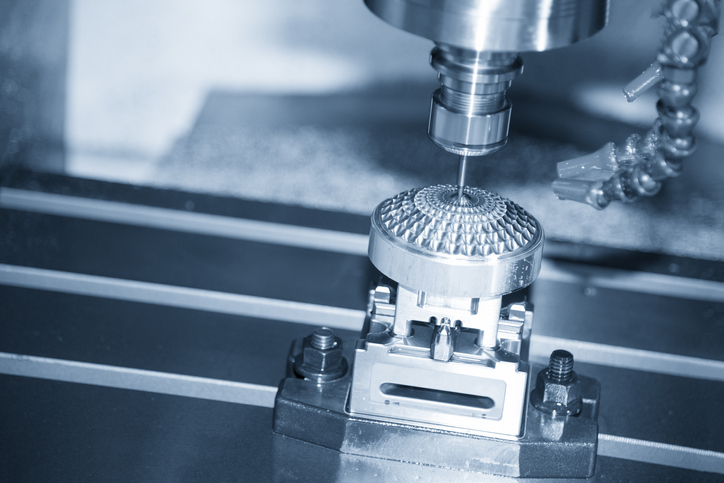
CNC milling is used to create both flat surfaces and complex contours as well as three-dimensional geometries. In this process, the tool rotates while being guided along defined axes over the firmly clamped workpiece. This makes it possible to precisely produce a wide variety of shapes and geometries.
The process offers a high degree of flexibility in component design and is particularly suitable for functional and structural parts with demanding geometries.
CNC turning is a machining process used to manufacture rotationally symmetric components. In this case, the workpiece rotates around its axis while the tool generates the desired geometry through a linear feed motion. Typical applications include cylindrical or rotationally symmetric components with high requirements for dimensional accuracy.
In general, a distinction is made between conventional and CNC-supported machining. While conventional processes are manually controlled, CNC machining is numerically controlled and highly automated. This allows multiple process parameters—such as axis movements, cutting speed, and feed rate—to be precisely controlled. The high repeatability of CNC turning and CNC milling makes them suitable for both individual parts and small to medium-sized series.

What is required for CNC‑machined parts?
The basis for CNC machining is a digital CAD model of the component. For an inquiry or order via the PROTIQ Marketplace, this model is required in STEP format. The CAD model serves as the foundation for further production planning.
In the next step, the model is converted into a CNC manufacturing program by an experienced operator. This program defines the individual machining steps and includes, among other things, information on tool paths, feed rates and cutting parameters, spindle speeds, the tools used, as well as additional functions such as coolant control.
The resulting CNC program, often referred to as G-code, can be read and precisely executed by the machine. In this way, the digital component model is reliably translated into a physical workpiece.
The advantages of CNC machining
- High precision and dimensional accuracy: CNC machines enable the production of complex components with high dimensional accuracy and consistent quality—even with tight tolerances.
- Reliable repeatability: Once processes are defined, they can be repeated multiple times with identical results. This ensures planning reliability and consistent component quality.
- Short lead times: The high degree of automation allows components to be manufactured efficiently, reducing machining times compared to manual processes.
- Flexible scalability: CNC machining is suitable for individual parts and prototypes as well as small to medium-sized production runs.
How does the manufacturing process for CNC parts work?
At the start of the manufacturing process, the raw material is securely clamped in the CNC machine. The shaping of the component is then carried out by selectively removing material using rotating cutting tools. The movement of the tool and the workpiece is computer-controlled along defined axes.
In CNC milling, the tool rotates while being guided over the firmly clamped workpiece. The desired component geometry is created step by step through multiple machining passes, with the contours gradually approaching the final shape. Depending on the geometry and accessibility of certain areas, it may be necessary to re-clamp the workpiece during the process.
In CNC turning, rotationally symmetric components are manufactured. The workpiece rotates around its own axis, while a fixed-position tool generates the desired geometry through a linear feed movement. This process is particularly suitable for cylindrical or rotationally symmetric parts with high requirements for dimensional accuracy.
In modern manufacturing systems, CNC turning and CNC milling can also be combined. By integrating both processes, complex components can be manufactured efficiently and additional machining steps can be reduced.
What limitations are there?
In CNC milling, tool accessibility is a key limitation. Material can only be removed where the tool can reach the component. Internal cavities, undercuts, or very delicate structures are therefore only possible to a limited extent or not at all. Compared to additive processes such as 3D printing, design freedom in CNC machining is therefore more restricted.
CNC turning is designed for the production of rotationally symmetric components. This results in clear geometric limitations regarding part shape. However, the range of producible geometries can be significantly expanded by additional or combined milling operations.
Despite these limitations, CNC machining is characterized by high dimensional accuracy, very good surface and material properties, and excellent repeatability. This makes it particularly suitable for functional components with clearly defined technical requirements.
Applications of CNC Milling
CNC milling has become an established manufacturing process in industry, particularly for the production of high-quality metal components with tight tolerances. The process is suitable for both prototypes and small to medium-sized series and offers high dimensional accuracy as well as reliable repeatability.
Mechanical Engineering and Plant Construction
In mechanical and plant engineering, many components are traditionally manufactured by milling. The combination of high accuracy requirements, functional demands, and often small batch sizes makes CNC milling a suitable process for these applications. The range extends from simple component geometries to complex, functional parts. Depending on the requirements, various materials are used, including high-strength tool steels, aluminum alloys, as well as brass and copper for specific functional components.
Post-processing of 3D-printed parts
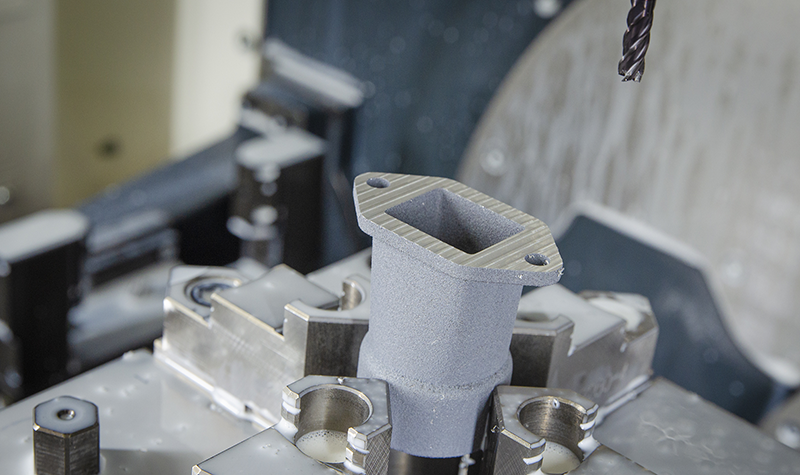
Additively manufactured components offer a high degree of design freedom and enable the realization of very complex structures. However, functional surfaces or areas with high requirements for dimensional accuracy and surface quality often require mechanical post-processing. CNC milling allows these areas to be selectively machined. The combination of 3D printing and CNC milling brings together the advantages of both processes and enables components that would not be feasible using a single manufacturing method alone.
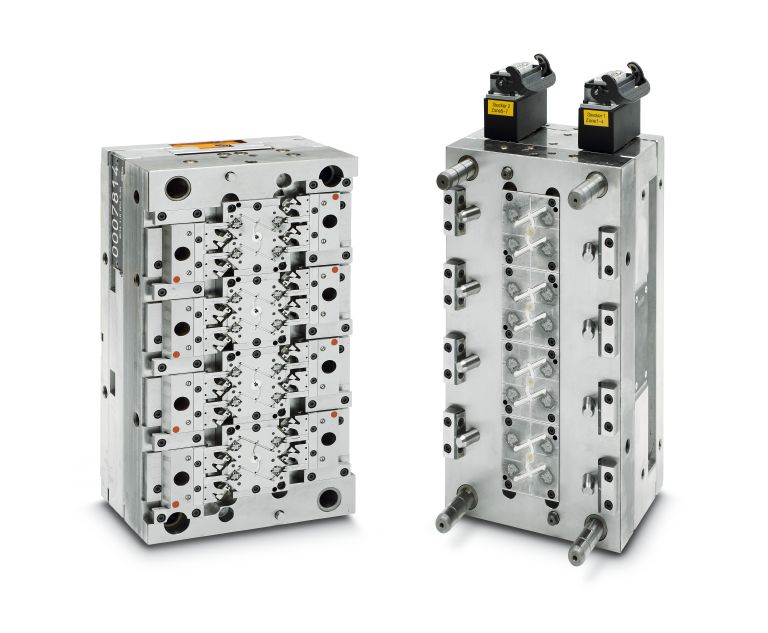
Toolmaking
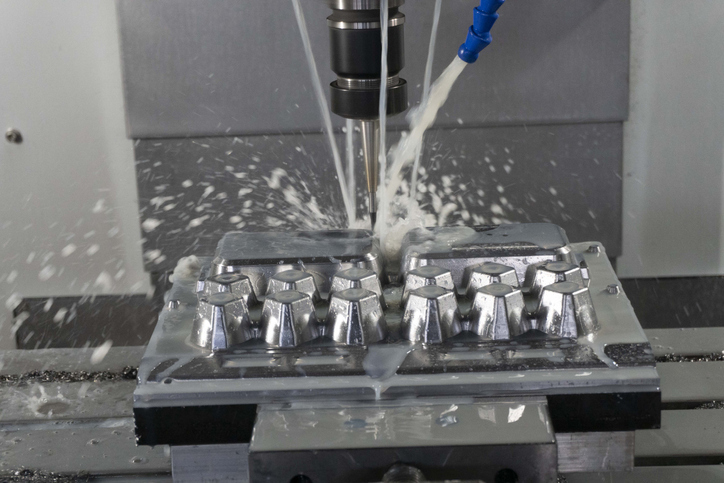
Components for toolmaking, such as those used in injection molding or stamping and forming technology, place high demands on geometry, dimensional accuracy, and material properties. Materials with high strength and hardness are often used.
Via the PROTIQ Marketplace, we work with qualified manufacturing partners who specialize in the precise production of such tooling components and meet industrial quality requirements
Prototypes and series production
Thanks to its high flexibility, CNC milling is suitable for prototypes and single parts as well as small to medium-sized series. Regardless of batch size, CNC components are manufactured with precision and reproducibility.
Via the PROTIQ Marketplace, you can upload your 3D data and submit an inquiry. Depending on the scope of the project, a project inquiry is also possible, or you can get in direct contact with our team to jointly coordinate requirements and implementation.