


 Deutsch
 English
 Italiano






















Pure Copper vs. Copper CuCrZr
Pure copper (Cu ETP) and the copper alloy CuCrZr are among the most important copper materials used in industrial 3D printing. While pure copper offers maximum electrical and thermal conductivity, CuCrZr combines high conductivity with increased strength and temperature resistance. Discover which material is best suited for your application.Material Properties Comparison
| Property | Pure Copper | CuCrZr |
|---|---|---|
| Electrical Conductivity | Maximum conductivity | High conductivity |
| Thermal Conductivity | Maximum thermal conductivity | High thermal conductivity |
| Mechanical Properties | Soft and highly formable | Higher strength |
| Material Purity | 100% pure copper | Copper alloy with approx. 99% copper content |
| Typical Applications | Conductors, contacts | Inductors, cooling channels |
Technical Properties in Detail
| Property | Pure Copper | CuCrZr |
|---|---|---|
| Density | 8.9 g/cm³ | 8.8–8.9 g/cm³ |
| Tensile Strength | 220 ± 10 MPa | 220 ± 30 MPa |
| Electrical Conductivity | 57 MS/m |
51 MS/m at the surface 32 MS/m in the core |
| Thermal Conductivity | 415 ± 10 W/mK | 265 W/mK |
| Surface Roughness | Ra 8–9 µm | Ra 8–9 µm |
Applications of Copper in 3D Printing
Copper and CuCrZr in Industrial Applications
Copper is one of the most important materials for applications requiring high electrical and thermal conductivity. Depending on the application requirements, either pure copper or CuCrZr is used.
Pure copper offers exceptionally high electrical and thermal conductivity and is ideal for components where the transfer of electricity or heat is the primary focus.
Typical Areas of Application at a Glance
Applications can be found in the automotive industry, mechanical engineering, electronics, and aerospace.
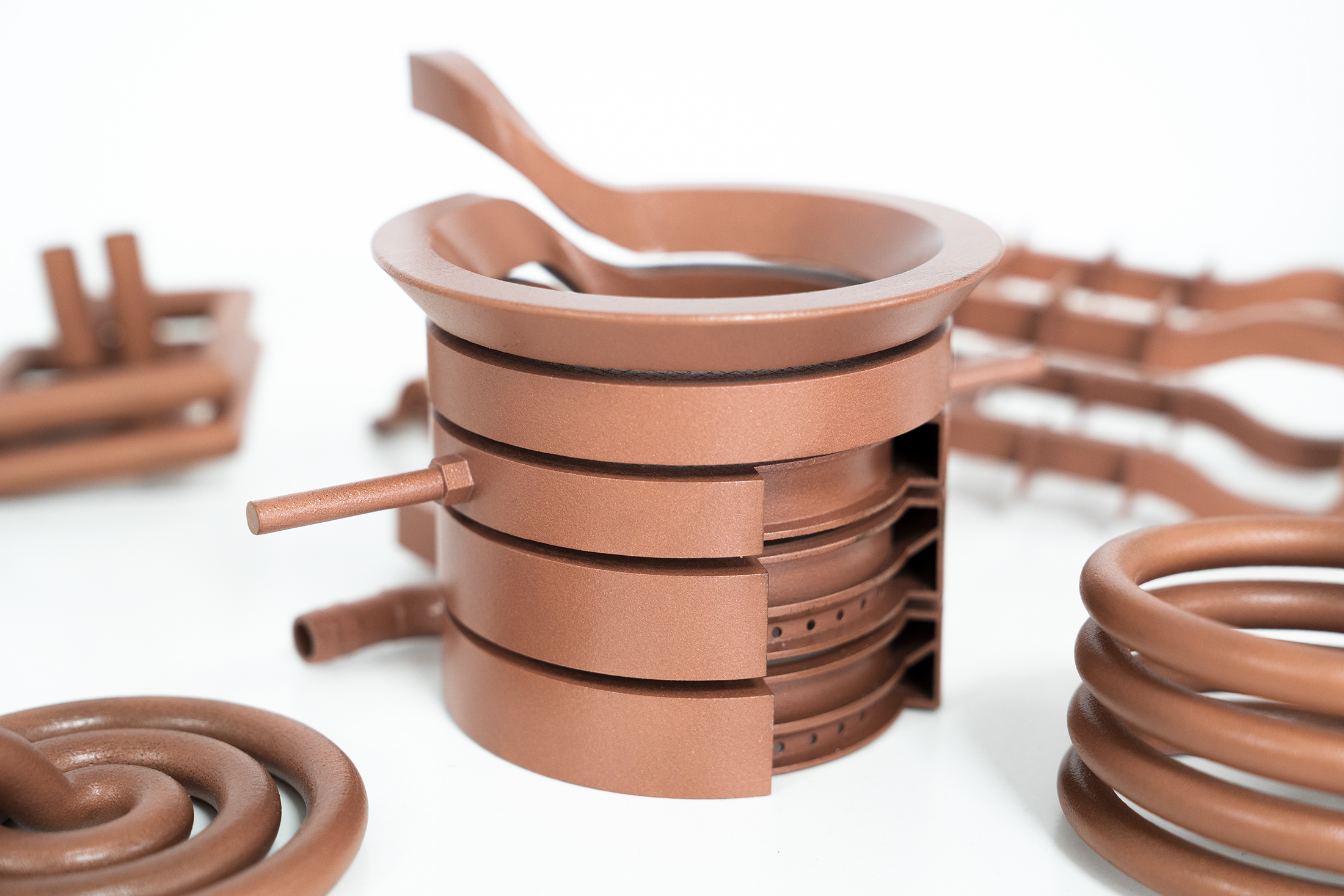
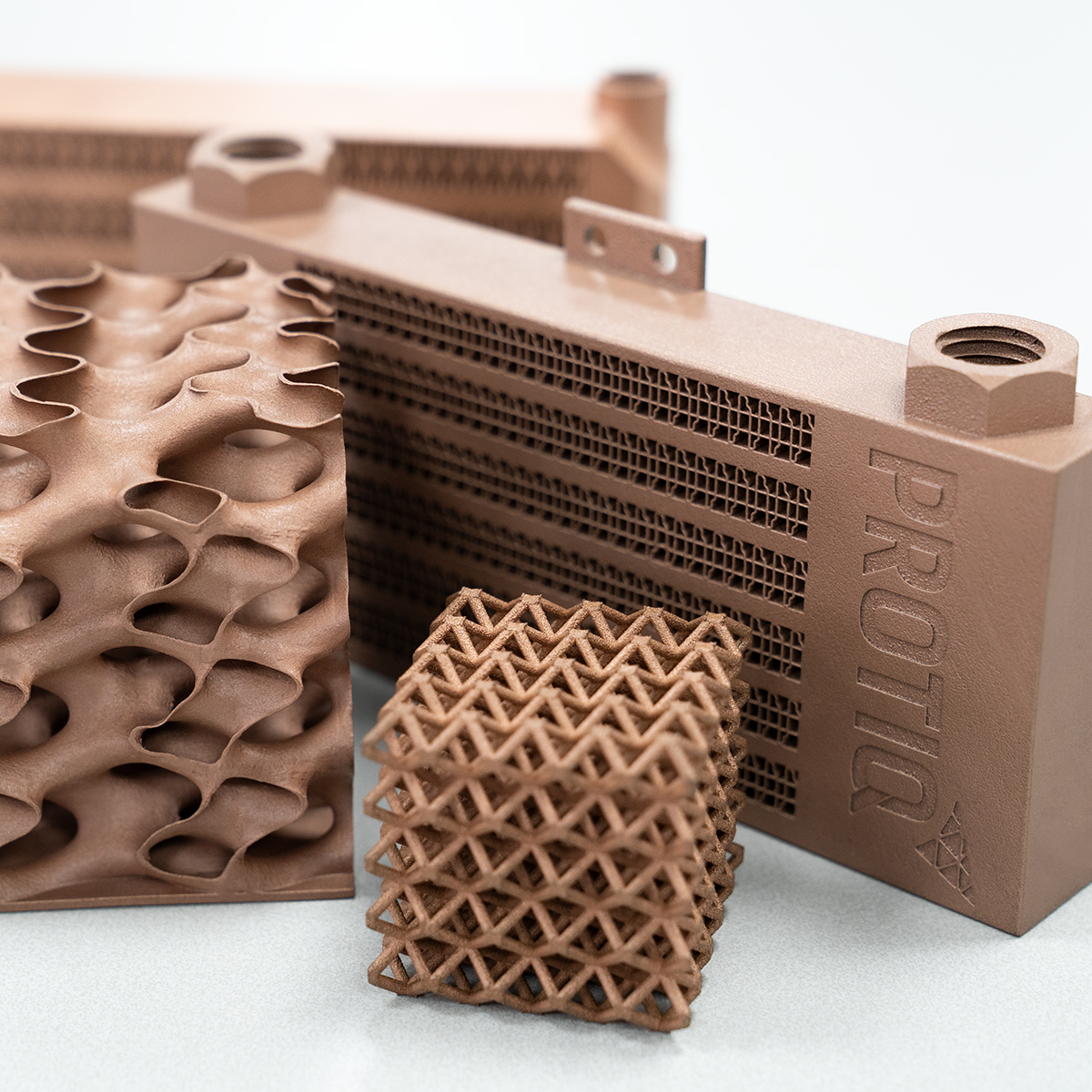
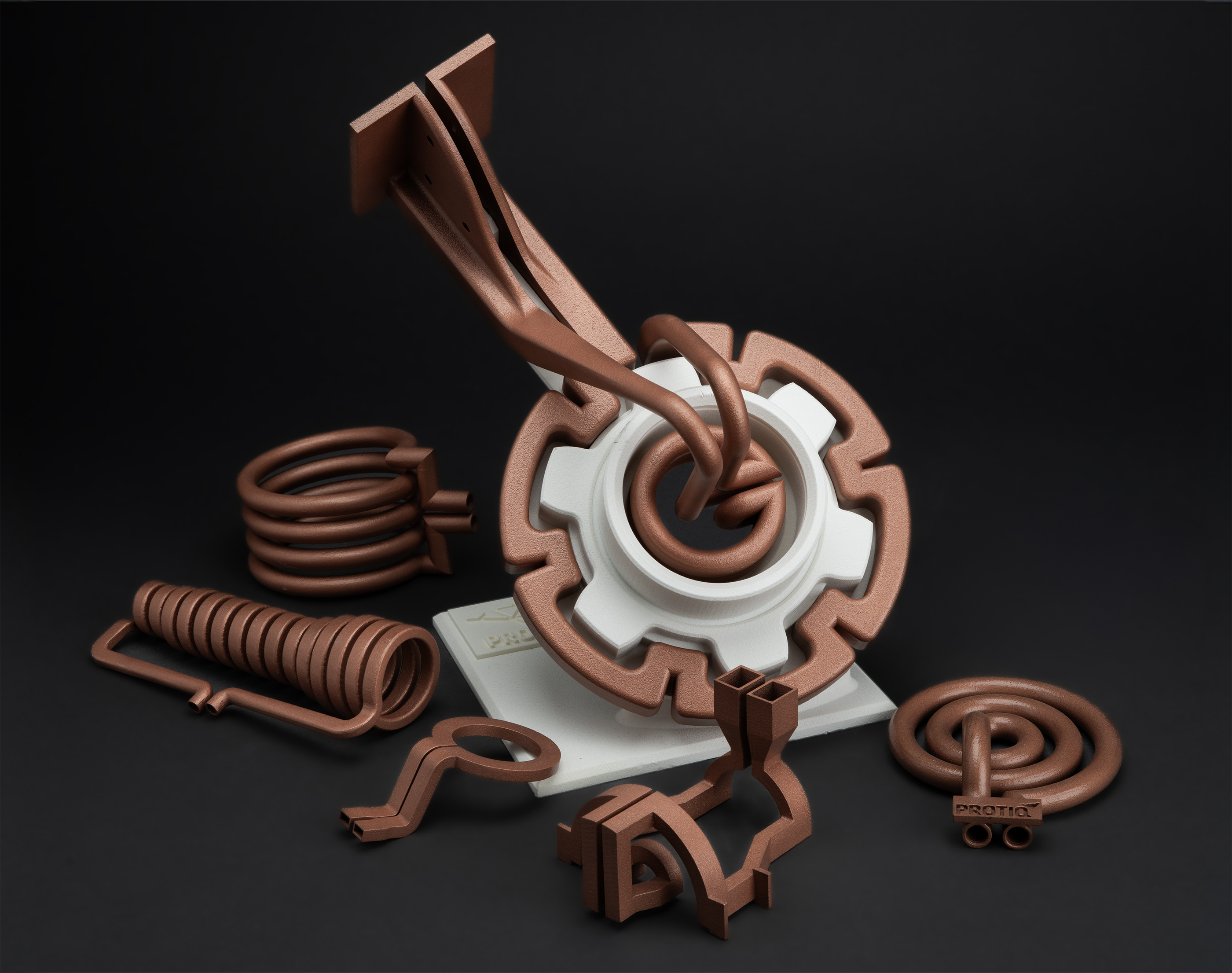
Typical applications include heat sinks, heat exchangers, inductors and coils, electrical contacts, and components with integrated cooling channels.
Pure Copper:
Maximum electrical and thermal conductivity, ideal for busbars, electrical contacts, conductor structures, and thermally conductive components.
CuCrZr:
High conductivity combined with increased strength, making it ideal for
inductors,
cooling channels,
heat exchangers,
and components exposed to thermal or mechanical stress.

Pure Copper or CuCrZr - Which Choice Is Right?
Pure Copper
- Maximum electrical conductivity for power lines and electrical contacts
- Very high thermal conductivity for conventional heat sinks
- Suitable for applications with low mechanical loads
- Proven material for industrial applications
CuCrZr
- Ideal for components exposed to increased mechanical stress
- Suitable for applications at elevated temperatures
- Well suited for heat sinks and heat exchangers under load
- Can be used for functionally integrated components in 3D printing
- Particularly suitable for demanding industrial applications
Frequently Asked Questions About Pure Copper and CuCrZr
Copper or CuCrZr Copper – Find the Right Material
Upload your part and compare copper and CuCrZr copper directly in the configurator.
Upload Your Part & Select Material →