

 Deutsch
 English
 Italiano
-
Manufacturing service
-
Manufacturing processes
-
Materials
-
Manufacturing processes
-
Other services
-
Knowledge area










.jpg)
Good 3D printing design
A Beginner’s Guide
What to Consider When Designing for 3D Printing
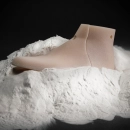
A well-thought-out design is one of the key factors for successful 3D printing. Even the most advanced machines have limitations if parts aren’t optimized for the chosen manufacturing process. In this article, we outline a few general design principles, using the powder-based technologies Selective Laser Sintering (SLS) and Selective Laser Melting (SLM) as examples.
These guidelines offer a useful starting point, but they are not one-size-fits-all solutions. Each part is unique, and many recommendations are simply approximate values. That’s why our experts at PROTIQ are always ready to assist and evaluate the manufacturability of your design individually.
Key Principles of Design Optimization
When designing for SLS or SLM, certain rules of thumb have proven useful in practice:
 Minimum Wall Thickness: Each material and process has limits on how thin walls or features can be before they become fragile or unprintable. For reliable results, it's best to avoid pushing the lower limits too far. When in doubt, choose a slightly thicker structure—or consult our team directly.
Overhangs and Support Structures: SLS can print many geometries without additional supports, as the surrounding powder stabilizes the part during the build. However, fine or shallow overhangs may still pose challenges. In contrast, SLM requires support structures for overhangs and critical geometries. Our manufacturing team adds these supports during data preparation, but smart design choices—like adding rounded edges or relief holes—can reduce the need for them from the outset.
 Holes, Channels, and Hollow Structures: Internal features such as holes and channels should be designed with post-processing in mind. The more complex or narrow the geometry, the harder it becomes to remove residual powder. As a rule of thumb, channels should remain accessible—ideally large enough for a cleaning wire or tool to pass through. Hollow structures should not be completely sealed, as trapped powder cannot be removed. This not only adds unnecessary weight but can also affect part performance. Openings or vent holes should be included to enable proper cleaning.
Dimensional Accuracy and Tolerances: Due to the layered manufacturing process, some dimensional variation is to be expected. Allowance for tolerances should be factored in—especially for snap fits, mating parts, or moving assemblies. If post-processing steps such as drilling or milling are planned, be sure to design with sufficient excess material in those areas.
Common Mistakes – and How to Avoid Them
Features too Thin: Extremely thin elements can become brittle or fail during printing. Instead of designing at the limit, opt for more robust geometries—or ask for feedback during the design phase.
Sealed Hollow Spaces: Fully closed cavities trap powder inside. This can affect part performance and result in loose material falling out during use. Always include sufficiently large access points for powder removal.
 Not Enough Clearance: Parts that are meant to move or assemble must be designed with adequate clearance. Otherwise, they may fuse together during printing and become unusable. Always plan for some space—especially in powder-based processes.
Helpful Resources
Great 3D printing starts with an understanding of the process—and thrives on close collaboration with experts. The principles outlined here are a great starting point, but the best results come when we review your designs together. After all, every part is unique—and that’s exactly what makes additive manufacturing so powerful.
More News

Are your 3D files ready?
Just upload your data. All files are automatically checked and optimized for printing.


