


 Deutsch
 English
 Italiano







Stay operational despite supplier failure
Securing induction technology, reducing dependencies
We support companies whose usual inductor supplier is no longer available as before – whether the issue concerns individual critical coils, replacement of worn inductors, or the structured rebuilding of supply.
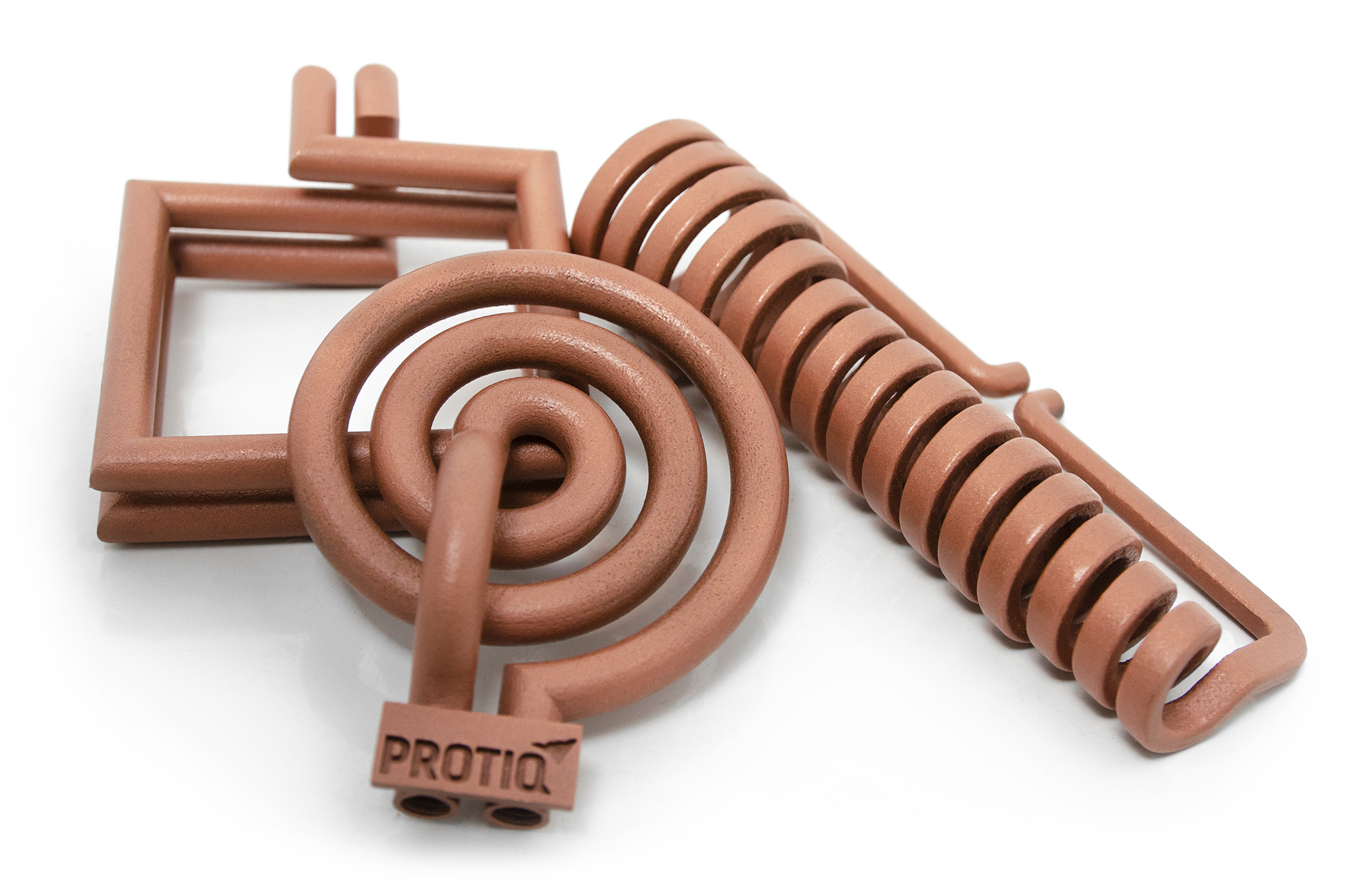
The result: 3D-printed copper inductors that allow you to keep your equipment operational, even if your previous inductor supplier can no longer deliver. This reduces dependencies, safeguards ongoing orders, and buys you time for strategic decisions within your supply chain.
Whether you need to replace a single coil at short notice or want to fundamentally strengthen your supply after the loss of an established inductor supplier, we help you obtain operational inductors quickly – and sustainably reduce your dependence on individual suppliers.
When a key supplier suddenly disappears …
A failed supplier is more than just one less name on the supplier list. Entire product lines, series production runs, or service contracts often depend on exactly these components. If this partner unexpectedly drops out due to insolvency, capacity issues, or geopolitical risks, a serious production risk can arise in a very short time. Tools and molds remain with the supplier, drawings are incomplete, CAD data is missing or outdated – while orders, delivery commitments, and contractual penalties continue. Finding a new supplier capable of delivering comparable quality in the required timeframe often takes weeks or months.
At this stage, time becomes the critical factor: every delay jeopardizes delivery schedules, customer relationships, and potentially your company’s reputation.
- Series production comes to a halt because a single component is no longer available
- Tools, molds, and data remain with the insolvent manufacturer
- Technical documentation is incomplete or exists only on paper
Your Next Inductor Project
We advise you on the design, manufacturing options, and applications of copper inductors. Our experts are happy to support you personally and provide an individual assessment of your project.

Closing supply chain gaps with additive manufacturing
Additive manufacturing makes it possible to produce critical components without long lead times and without new tooling. Instead of lengthy tool procurement and months-long ramp-up phases, the focus is on component geometry and function: once a digital model is available – whether from existing CAD data, a part scan, or re-engineering – production can begin.
This allows missing components to be bridged in the short term until a long-term solution is established. In many cases, 3D printing even becomes a permanent manufacturing concept: flexible, scalable, and independent of individual suppliers.
The result is not just a single replacement part, but an alternative manufacturing concept that makes companies more resilient against future supplier failures.
Fast availability
Prototypes, spare parts, and small series can be realized in a short time – without toolmaking.
No tooling and high flexibility
Geometry or design changes can be implemented directly in the data set, without new molds or fixtures.
Suitable for interim and long-term solutions
Additive manufacturing closes short-term supply chain gaps and, for suitable components, can be used as a permanent production setup.
From a missing component to a finished solution
The clearer the path, the faster you can act. That is why our process is deliberately kept lean – from initial contact to a ready-to-install component.
1. Describe the situation and provide data
You tell us which component is affected and what requirements it must meet. You can provide drawings, CAD data, or photos of the part – if necessary, also multiple variants or bills of materials. Based on your information and requirements, we assess feasibility and provide a quotation.
3. Sample part and validation
On request, we initially produce sample parts for testing under real operating conditions. This allows you to verify fit, function, and durability before committing to further supply. Design adjustments can be implemented quickly during this phase.
4. Series production and supply concepts
After approval, we are happy to handle recurring production – from small series to regular call-offs. If desired, we can jointly define delivery and inventory concepts to ensure that critical components remain reliably available in the future.
The result is a component that works – and a process that sustainably secures your ability to deliver.
Typical use cases – where we keep supply chains running
Every supply chain is different, but the challenges are often similar. In these situations, additive manufacturing is particularly frequently used to remain operational.
1. Series component becomes unavailable, production faces shutdown
A supplier manufactures a function-critical component for your series – and suddenly becomes unavailable. Tools and molds remain with the supplier, and new offers with conventional processes are not available for months. With 3D printing, the component is digitized and additively manufactured. Initially as a fast interim solution, often later as a permanent manufacturing setup.
2. Tools and molds remain with an insolvent supplier
Existing injection molding or die-casting tools belong to the previous manufacturer and are not accessible. New tooling would be expensive and significantly extend your time to market. 3D-printed components ensure short-term availability – without tooling and with significantly shorter lead times.
3. Spare parts for older equipment are no longer available
For existing machines or systems, official spare parts are no longer supplied, the manufacturer has discontinued the product line, or is no longer in the market. Existing sample parts are scanned or re-engineered and then additively manufactured. This keeps equipment in operation longer without costly reinvestment.
4. Bridging the gap until new suppliers are established
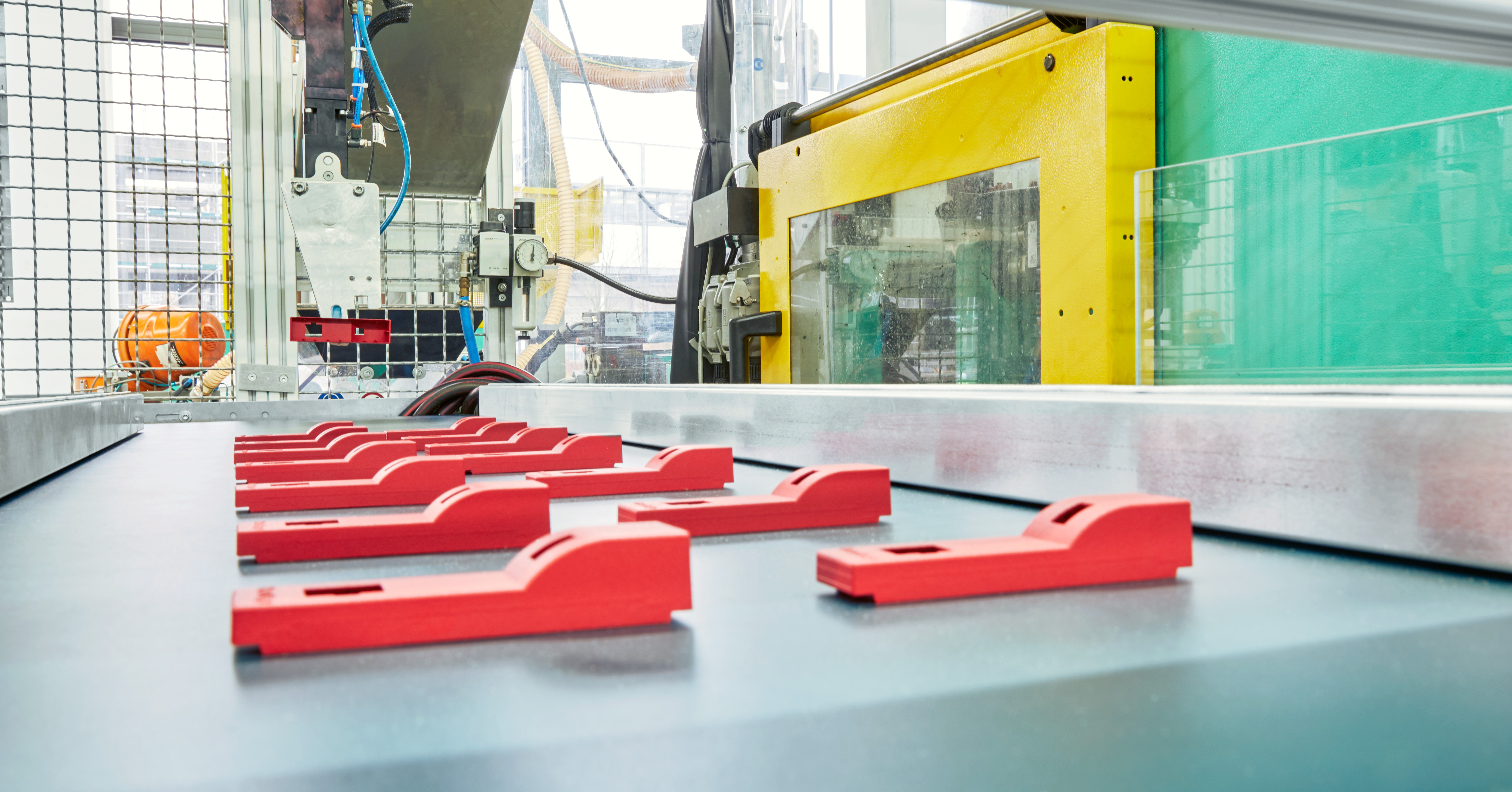
You have identified a new supplier, but ramp-up takes time: sampling, tool approvals, series release. Additive manufacturing bridges this phase without interrupting production. Once the new supplier is stable, supply can be transitioned seamlessly – or the additive solution retained if it proves cost-effective.
5. Functional optimization during supplier change
The supplier failure becomes an opportunity to improve the component – for example by reducing weight, integrating cooling channels, or shortening assembly times. The design freedom of 3D printing allows such optimizations to be implemented directly, rather than simply copying the old design.
These examples show that it is not just about replacing a missing part, but about making your supply chain more robust and future-proof.
Industrial 3D printing for plastics and metals
To truly replace a failed supplier, “just any 3D printing” is not sufficient. The decisive factors are suitable technologies, appropriate materials, and an understanding of industrial requirements.
Plastics
For functional plastic components, powder- or resin-based processes are typically used – for example for housings, brackets, clips, air ducts, or functional prototypes. Depending on the application, materials with specific properties can be selected, such as:
- High stiffness and dimensional accuracy
- Temperature resistance for use in technical environments
- Impact resistance for mechanically stressed components
In this way, many classic injection-molded parts can be additively manufactured at least temporarily, and often also as a long-term solution.
Metals
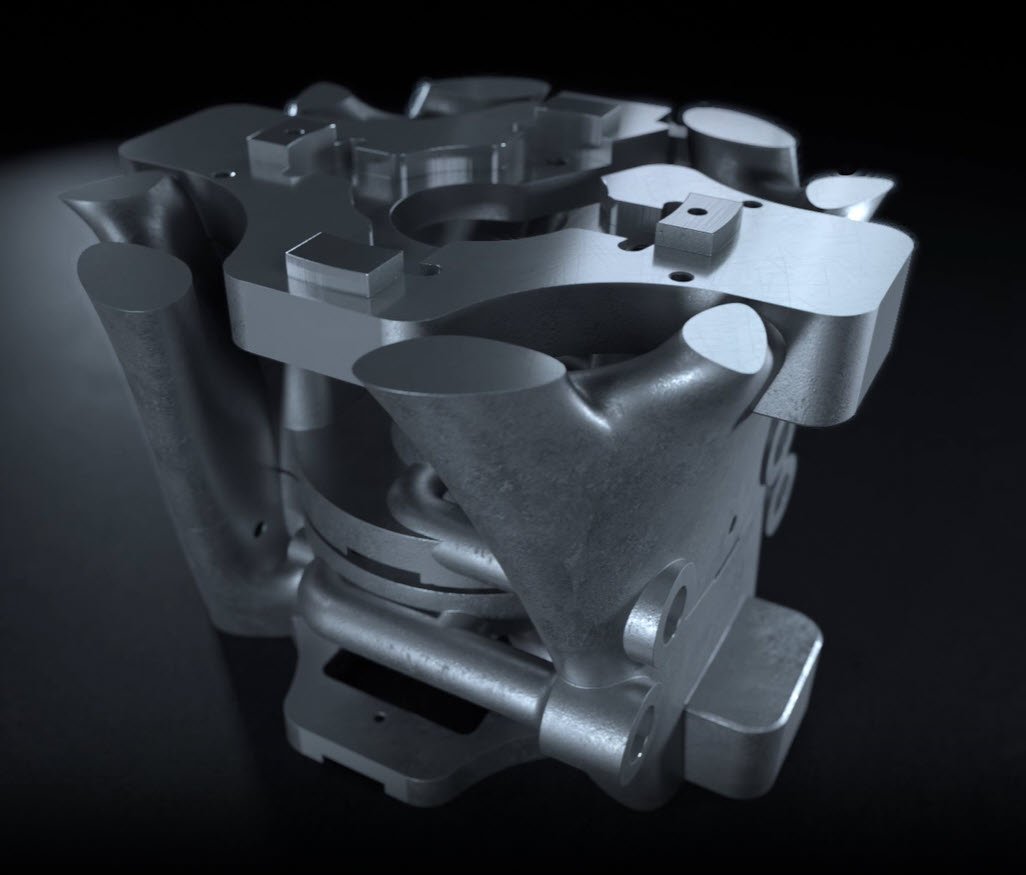
For load-bearing structural components, functional parts, and thermally stressed applications, metal 3D printing processes are suitable. These include, among others:
- Highly detailed components with complex internal geometries
- Components with integrated channels, ribs, or lightweight structures
- Parts intended for subsequent machining or integration into assemblies
Depending on the application, different alloys can be used – for example to achieve good thermal conductivity, corrosion resistance, or high strength.
Frequently asked questions
What if we do not have CAD data for the component?
This is not a disqualifying factor. If no digital data is available, we work with the physical sample part or drawings. The component can be scanned or digitally reconstructed as part of a re-engineering process. The most important inputs are dimensions, installation conditions, functional requirements, and quantities. We clarify the rest together during the project.
How quickly can the first parts be delivered?
This depends on the complexity of the component, the required quantity, and the available data. If CAD data is already available and the part is suitable for additive manufacturing, initial sample parts are often realistic within a few days. If scanning or design preparation is required first, lead times increase accordingly. In all cases, you will receive an early assessment of feasibility and timing.
Is 3D printing only suitable as an interim solution – or also for series production?
Both are possible. 3D printing is often initially used to remain operational in the short term until a new supplier or tooling concept is established. In many projects, however, additive manufacturing proves to be economically viable for permanent small and medium series – especially for complex geometries, high variant diversity, or moderate quantities.
How reliable is the quality of additively manufactured components?
Industrial 3D printing operates with defined processes, qualified materials, and documented quality assurance. Functional dimensions, tolerances, and surface requirements are agreed in advance. Depending on the component and application, inspection reports or sample approvals can also be arranged. The goal is always for the component to reliably fulfill its function in your application.
How do costs compare with conventional manufacturing processes?
The cost structure differs from conventional processes: tooling costs are usually eliminated, while per-part costs are higher than in fully utilized mass injection molding. Especially for small to medium quantities, short-term requirements, or complex geometries, 3D printing can still be more economical because initial costs and ramp-up times are eliminated. After your inquiry, you will receive a concrete quotation to facilitate direct comparison.
What information do you need for an initial assessment?
For a quick start, the following information is helpful:
- Available data: CAD files, drawings, or sample parts
- Quantities (one-off, annual, call-off scenarios, etc.)
- Boundary conditions: temperature, media contact, mechanical loads
- Desired timeframe for initial parts
With this information, we can quickly assess whether and how your component can be produced additively – and which approach makes sense.