


 Deutsch
 English







Supplier gone? Keep your production running!
When a key supplier is no longer available ...
A collapsed supplier is more than just one less name on your vendor list. Entire product lines, series production runs or service contracts often depend on exactly these components. If this partner unexpectedly fails due to insolvency, capacity issues or geopolitical risks, a serious production risk arises within a very short time. Tools and moulds are held by the supplier, drawings are incomplete, CAD data is missing or outdated – while orders, delivery commitments and contractual penalties continue to run. Finding a new supplier who can deliver the parts in comparable quality and within the required timeframe often takes weeks or even months.
In this phase, time is the critical factor: every delay jeopardises delivery dates, customer relationships and, in case of doubt, your reputation in the market.
- Series production comes to a standstill because a single component is no longer available
- Tools, moulds and data remain with the insolvent manufacturer
- Technical documentation is incomplete or exists only on paper
- Conventional procurement processes are too slow to compensate for the failure at short notice
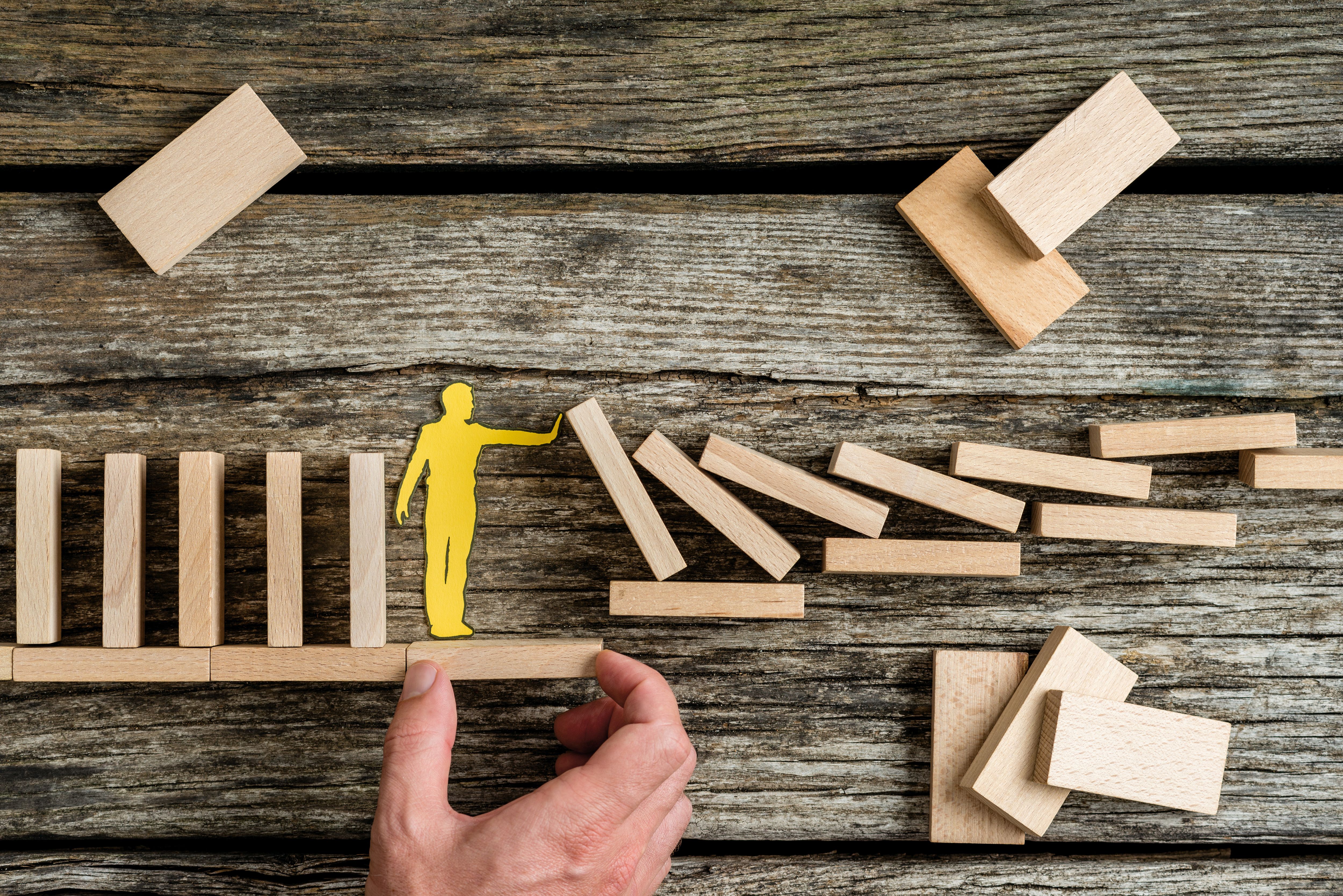
Closing supply chain gaps with additive manufacturing
Additive manufacturing makes it possible to produce critical components without long lead times and without new tooling. Instead of complex tool procurement and months-long ramp-up phases, the focus is on the geometry and function of the part: as soon as a digital model is available – whether from existing CAD data, a part scan or a re‑engineering process – production can start.
This allows missing components to be bridged at short notice until a long-term solution is in place. In many cases, 3D printing even becomes a permanent production concept: flexible, scalable and independent of individual suppliers.
In the end, you do not just gain a single component, but an alternative production concept that makes your company more resilient to future supplier failures.
Fast availability
Prototypes, spare parts and small series can be realised in a short time – without toolmaking.
Tool‑free and flexible
Changes to geometry or design can be made directly in the data set, without new moulds or fixtures.
Suitable as a bridge and long‑term solution
Additive manufacturing closes supply chain gaps at short notice and, for suitable components, can be used as a permanent production setup.
Broad range of applications
From functional plastic parts and metal components through to complex geometries that are difficult or impossible to manufacture conventionally.
From missing component to finished solution
The clearer the path, the faster you can act. That is why our process is deliberately lean – from the first contact through to the ready‑to‑install part
1. Describe the situation and share your data
You explain which component is affected and which requirements it has to meet. You can send us drawings, CAD data or photos of the part – including multiple variants or bills of materials if required. Based on your information and requirements, we can assess feasibility and provide you with a quotation.
3. Prototype part and validation
If required, we first produce prototype parts for testing in real operation. This allows you to check fit, function and load capacity before deciding on further supply. Design adjustments can be implemented quickly at this stage.
4. Series production and supply concepts
Once the part has been approved, we are happy to take over recurring production – from small batches through to regular call‑offs. If desired, we jointly define delivery and stocking concepts to ensure that critical components remain reliably available in the future.
In the end, you receive a part that works – and a process that sustainably secures your ability to deliver.
Typical use cases – where we safeguard supply chains
Every supply chain is different, but the problems are often similar. In these situations, additive manufacturing is frequently used to remain operational.
1. Series component fails, production is about to stop
A supplier produces a function‑critical part for your series – and suddenly is no longer available. Tools and moulds remain with the supplier, and new offers will not be ready to deliver for months. Using 3D printing, the component is digitalised and additively manufactured: initially as a fast bridge solution, and often later as a permanent production setup.
2. Tools and moulds remain with the insolvent supplier
Existing injection moulding or die‑casting tools belong to the previous manufacturer and are not accessible. New tools would be expensive and would significantly prolong your time‑to‑market. With 3D‑printed parts, you secure availability at short notice – without toolmaking and with significantly shorter ramp‑up times.
3. Spare parts for older equipment are no longer available
There are no official spare parts available for existing machines or systems; the manufacturer has discontinued the product or left the market. Existing sample parts are scanned or reverse‑engineered and then additively manufactured. This keeps equipment in service for longer without the need for expensive new investments.
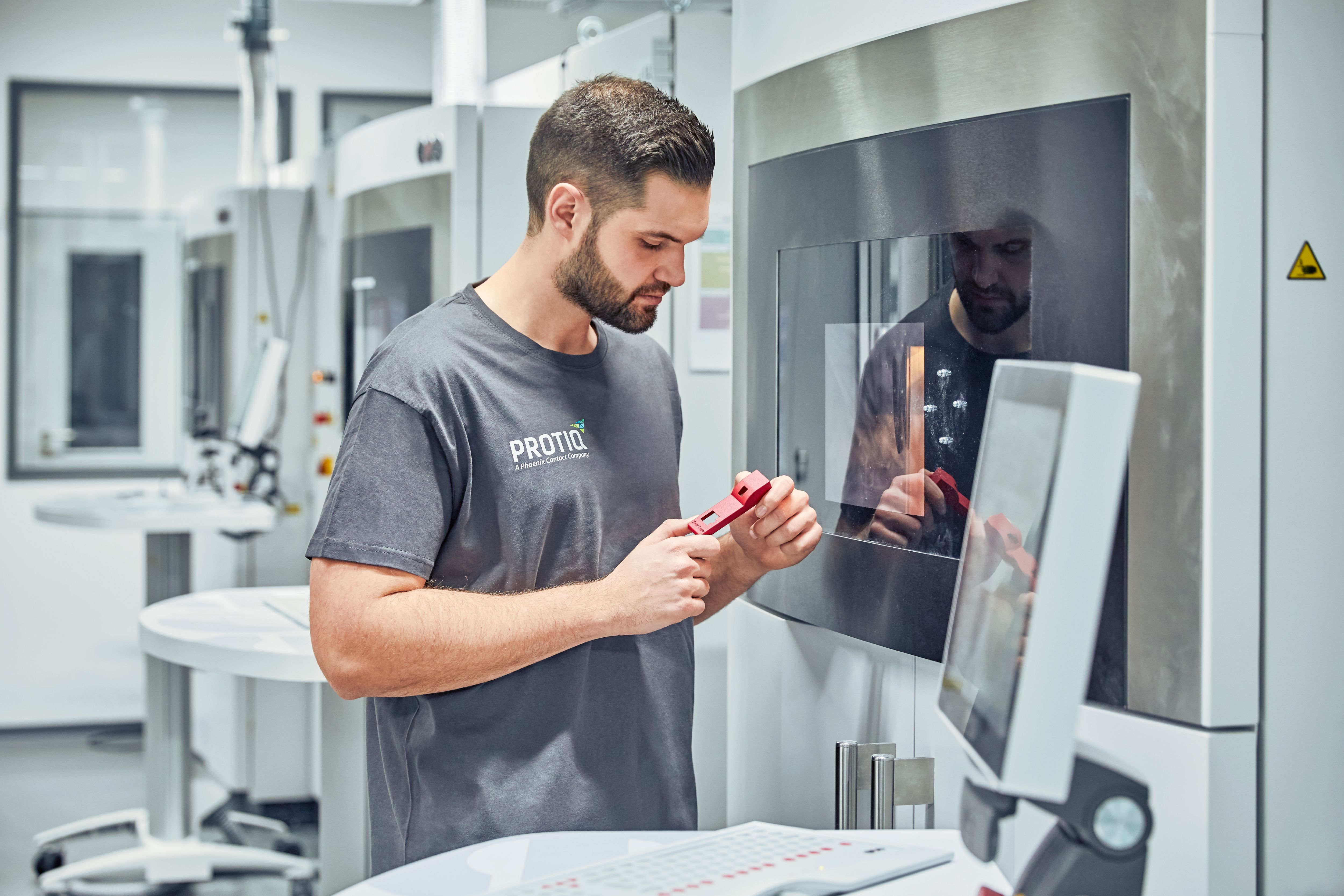
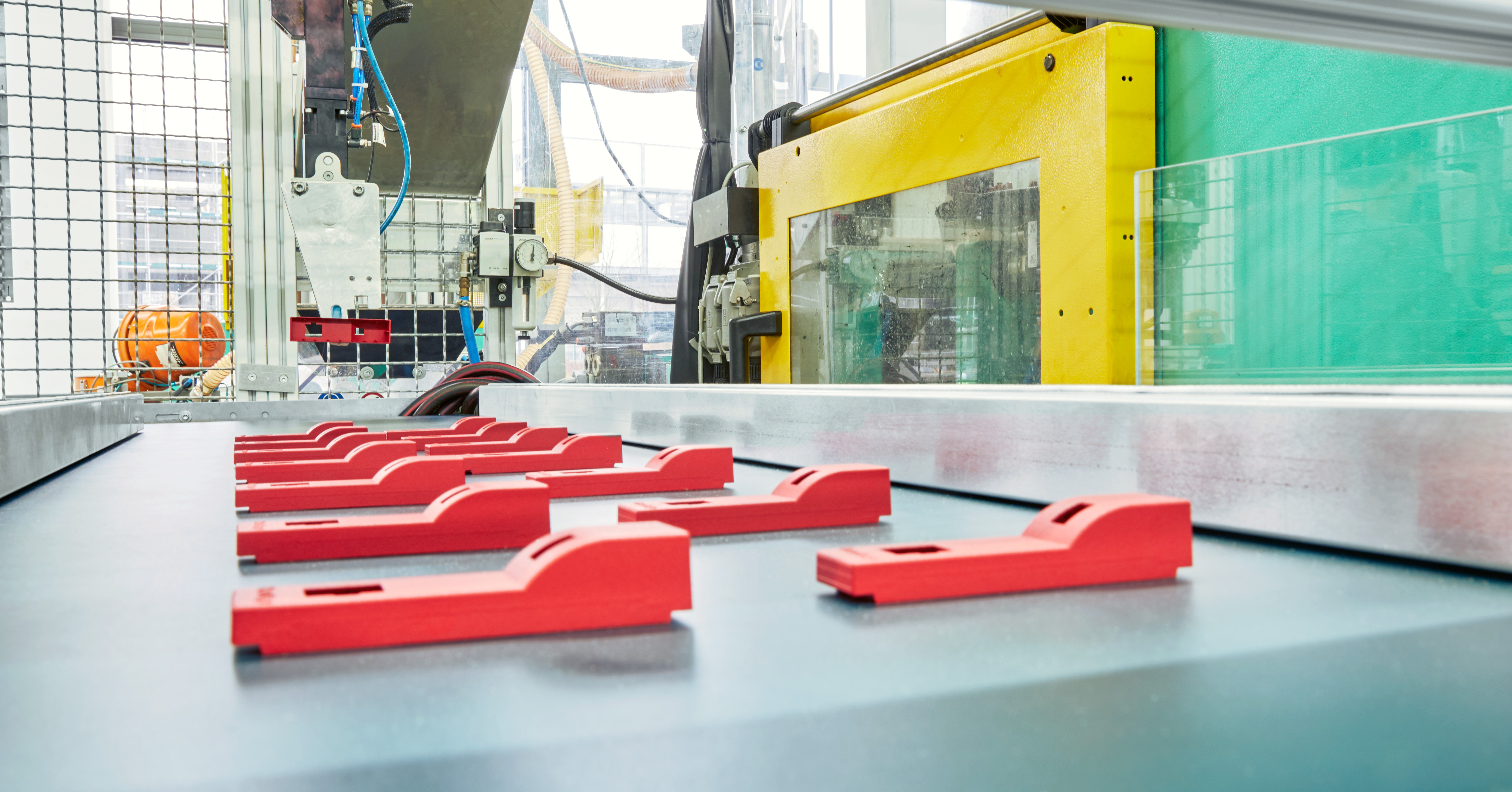
4. Bridging the gap until new suppliers are in place
You have identified a new supplier, but the ramp‑up phase is long: sampling, tool approvals, series release. With additive manufacturing, you bridge this phase without interrupting production. Once the new supplier is running stably, you can switch supply seamlessly – or keep the additive solution if it proves to be economically attractive.
5. Functional optimisation as part of the supplier change
The supplier failure becomes an opportunity to improve the part – for example by reducing weight, integrating cooling channels or shortening assembly times. Thanks to the design freedom of 3D printing, such optimisations can be implemented directly instead of merely copying the old design.
These examples show that it is not just about replacing a missing part, but about making your supply chain more robust and future‑proof.
Industrial 3D printing for plastics and metals
For a component to genuinely take over the role of a failed supplier, “any kind of 3D printing” is not enough. The decisive factors are suitable processes, appropriate materials and a deep understanding of industrial requirements.
For functional plastic parts, powder‑based or resin‑based processes are typically used, for example for housings, brackets, clips, air ducts or functional prototypes. Depending on the application, materials with specific properties can be selected, for example:
- High stiffness and dimensional stability
- Temperature resistance for use in technical environments
- Impact resistance for mechanically stressed parts
As a result, many conventional injection‑moulded parts can be produced additively – at least as a temporary solution and often also in the long term.
Metals
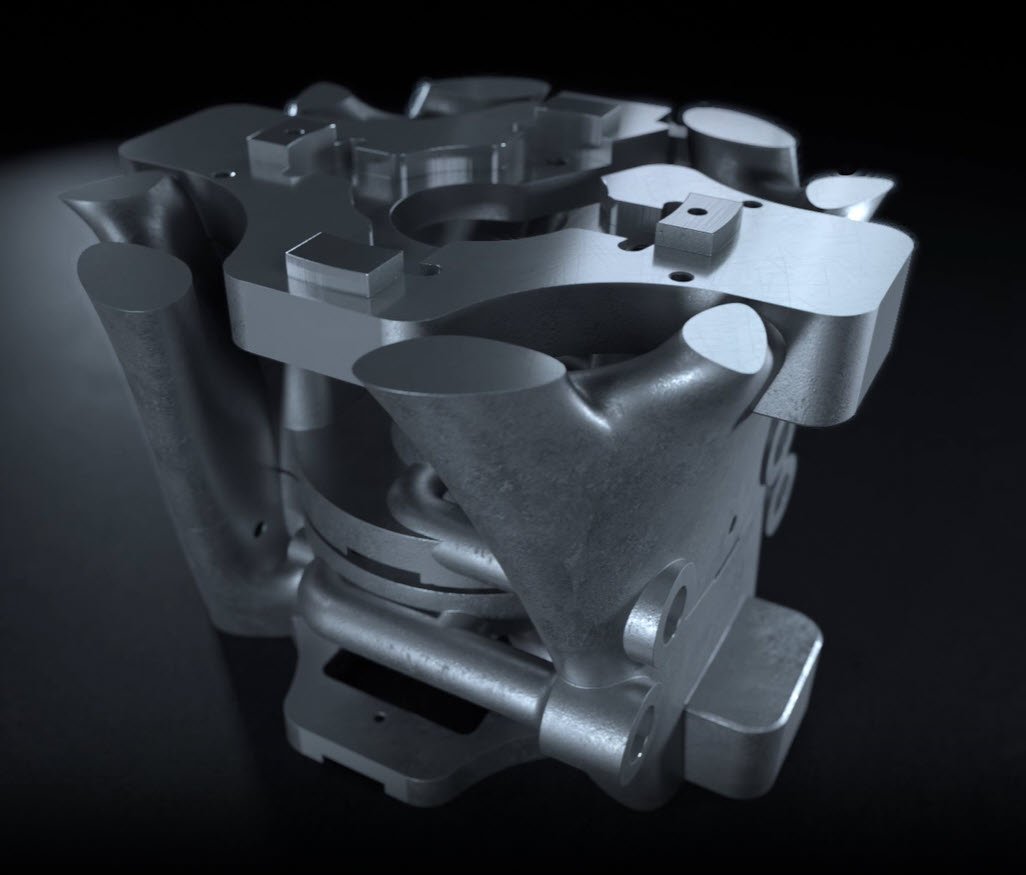
For highly loaded structural parts, functional components and heat‑stressed parts, metal 3D printing processes are an option. These include, among others:
- Finely detailed components with complex internal geometries
- Components with integrated channels, ribs or lightweight structures
- Parts that are later machined or integrated into assemblies
Depending on the application, different alloys can be used – for example for good thermal conductivity, corrosion resistance or high strength.
Frequently asked questions
What if we do not have any CAD data for the component?
That is not a show‑stopper. If no digital data is available, we work with the physical sample part or drawings. The component can be scanned or digitally remodelled as part of a re‑engineering process. The most important factors are dimensions, installation situation, functional requirements and quantities. We clarify everything else together in the project.
How quickly can the first parts be delivered?
This depends on the complexity of the part, the quantities required and the data situation. If CAD data already exists and the component is well suited for additive manufacturing, first prototypes can often be produced within a few days. If a part has to be scanned or redesigned first, the lead time increases accordingly. In any case, you will receive an early assessment of feasibility and timing.
Is 3D printing only suitable as a temporary solution – or also for series production?
Both are possible. 3D printing is often used initially to remain operational in the short term until a new supplier or tooling concept is in place. In many projects, however, it becomes clear that additive manufacturing is also economically attractive for permanent small and medium series – particularly for complex geometries, high‑variant parts or moderate quantities.
How reliable is the quality of additively manufactured parts?
Industrial 3D printing uses defined processes, qualified materials and documented quality assurance. Functional dimensions, tolerances and surface requirements are agreed in advance. Depending on the part and application, additional measurement reports or sample approvals can be agreed. The goal is always that the component reliably fulfils its function in your application.
What costs should we expect compared to conventional processes?
The cost structure differs from conventional processes: as a rule, there are no tooling costs, but unit costs per part are higher than with fully utilised high‑volume injection moulding. Especially for small and medium quantities, short‑term demand or complex geometries, 3D printing can nevertheless be more economical because initial costs and ramp‑up times are eliminated. After your enquiry, you will receive a concrete quotation that makes the comparison easier.
What information do you need for an initial assessment?
The following information helps us to get started quickly:
- Available data: CAD files, drawings or sample parts
- Quantities (one‑off, per year, call‑off volumes, etc.)
- Boundary conditions: temperature, media contact, mechanical loads
- Desired timeframe for first parts
With this information, we can quickly tell whether and how your component can be produced additively – and which approach makes sense.